Monday, May 31, 2021

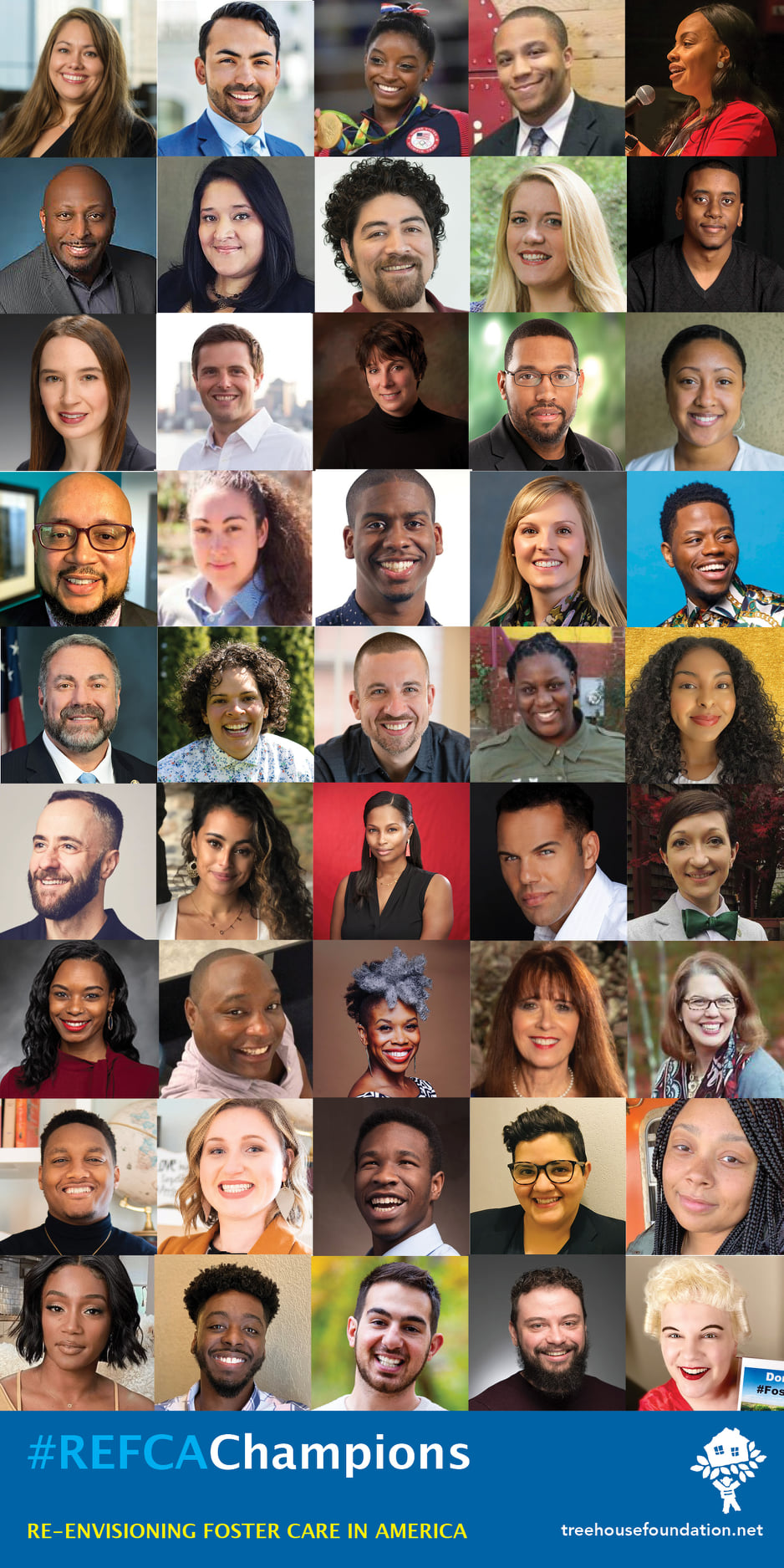
Lisa Dickson named as 2021 REFCA Champion

Lisa Dickson serves as co-facilitator of the Overcoming Hurdles in Ohio Youth Advisory Board (OHIO YAB) and Communications Chair for Alumni of Care Together Improving Outcomes Now (ACTION) Ohio. She is the lead organizer of Ohio’s annual regional Thanksgiving Together celebrations for foster care teens and alumni. These positions are in a volunteer capacity, in addition to her full-time job.

Lisa emancipated early from foster care and entered college at age 16. Within a year, she experienced homelessness. During her time in college and graduate school, she visited former placements from her time in care, including group homes and an emergency shelter, to support fellow foster youth.

Beginning in 2006, Lisa has listened to the voices of young people in and from foster care in the state of Ohio, and empowered them to design proactive policy solutions, including the Fostering Stable Housing Opportunities Act. She was a founding member and former chair of Ohio Reach, a statewide initiative to support post-secondary success for foster youth. She is deeply proud of the accomplishments of Ohio foster care youth and alumni, and grateful for allies and partners.


Monday, May 24, 2021

First time seeing Carly and the kiddos since February 2020


Link to individual photos.

By time we left Pittsburgh, Nathan and I were covered in princess and Pokémon stickers and tattoos, thanks to the loving ministrations of our beloved grandchildren.  

Six-year-old Edward had decided that, in his words: “My new name is Nana Lisa Grandpa Nathan Buck.” 

Edward and I made two books together; this was his idea. He brought in paper, folded it in half and stapled the fold.  At his direction, Edward and I illustrated each page with the habitat of his Pokémon stickers (land, water, sky) and then took turns carefully placing 3 or 4 Pokémon stickers on each page. 

We included illustrations of some of their powers (freeze rays, fire, Zzzzz for putting others to sleep). Edward then dictated, and I scribed, some somewhat repetitive dialogue between the characters:

- Character 1: I’m gonna get you.  
- Character 2: Aghhhhhhhhhh!

- Character 1: I’m gonna freeze you.  
- Character 2: Aghhhhhhhhhh!

- Character 1: I’m gonna poison you. 
- Character 2: Aghhhhhhhhhh!

- Character 1: I’m gonna burn you.  
- Character 2: Aghhhhhhhhhh!

Edward had me title both of the books: “Nana Lisa and Edward’s book.”  He had his mom read them multiple times, me read them, Nathan read them and before bedtime, he chose them as his bedtime story.

Four-year-old Fran’s penchant was for princesses. She followed Edward’s example and made a book. Her cute little voice is an adorable result of previous tonsil and adenoid removal. She’s been going to speech therapy to help with pronunciation.

Two-year-old William’s contributions were cuteness, lots of exploratory energy - and maybe a bit of pee.

Tuesday, May 18, 2021

A Youth Ombudsman Office could have saved Ma'Khia Bryant's life

Ma'Khia Bryant death: Former foster-care kids say youth ombudsman in Ohio could make a difference
Ken Gordon, The Columbus Dispatch, May 12, 2021.

Nikki Chinn (left) and Deanna Jones (center) were among those who testified in front of an Ohio Senate committee last week about their experiences in foster care and the need for an independent youth ombudsman office. They were accompanied by Kim Eckhart (right) of the Children's Defense Fund-Ohio.

Deanna Jones stepped to a lectern in the Ohio Statehouse last week and told lawmakers that having a youth ombudsman office might have saved Ma’Khia Bryant’s life.

Jones spoke as one who, like Bryant, had been in foster care and knew from personal experience that having someone who will listen to a foster child’s concerns and take appropriate action can make all the difference.

Bryant, 16, was fatally shot by a Columbus police officer April 20 outside her Far East Side foster home. Bryant had a knife in her hand and had swung it at one woman and was threatening another when she was killed.

Exact circumstances of what led up to the incident remain unclear.

But Jones emphasized reports that Bryant and other foster children at the home appeared to be having trouble with several former foster children who had lived there, and that Bryant’s younger sister had called police in March and requested that she be removed from the home.

“I understand there are things that are debatable and that (Bryant) had a knife and that’s all some people saw,” said Jones, 39, “but honestly, I feel Ma’Khia was in survival mode, and that’s why I identified with her.”

Jones said during her rocky tenure in foster care in the 1980s and 1990s, she benefited from a sympathetic caseworker who listened to her complaints and removed her from several bad homes.

“I saw how my life could have ended if I had not had an advocate,” Jones said. “There were times when my rights and concerns were being violated, but I had someone to go to bat for me, and we don’t have that now.”

And that’s why Jones and several other former foster kids testified in front of an Ohio Senate committee last week in favor of ensuring that a newly created Youth Ombudsman Office is adequately funded and also fully independent of the Ohio Department of Job and Family Services, which oversees the foster-care system.

Deanna Jones, of the East Side, testified last week in front of an Ohio Senate committee about her experience in foster care and the importance of establishing a youth ombudsman office that is independent of the state agency that oversees Ohio's Children Services' system.

The issue is emotional to former foster kids who viewed Bryant’s death as avoidable.

“To those of us from foster care, anyone who was in foster care is our brother and sister, so losing one of our sisters is heartbreaking to us,” said Nikki Chinn, 30, a Clintonville resident who said she endured abuse and neglect in the foster-care system. “There are so many different opinions people have of the situation, but the fact of the matter is that a young girl in the foster system died, and there was no reason she should have died."

Chinn was in and out of foster care from a very young age until, at age 14, her biological parents lost all parental rights, then she remained in foster care until she aged out at 18.

In one home, Chinn said, she and four other “foster sisters” were forced to share one bedroom with a bunk bed and a mattress. They took turns sharing the beds and sleeping on the floor. Meanwhile, they were not allowed to eat without permission, she said, and there were padlocks on the kitchen cabinets and refrigerator.

Chinn said they repeatedly complained to caseworkers, but, “it got turned around on us. The foster mother was able to convince the caseworker that it was a punishment for something we did wrong."

Kim Eckhart is the Kids COUNT project manager for the Children's Defense Fund-Ohio, a nonprofit organization focused on lifting kids out of poverty and protecting them from abuse and neglect.

She accompanied the former foster kids who testified last week.

“A lot of youth are blamed for being in foster care because of their behaviors, like they are responsible for the situation they are in,” she said. “They want to have someone who can really hear them from an unbiased perspective, which I hope is that this youth ombudsman office will be.”

One key state official said that will be the case. Kristi Burre is director of Children’s Initiatives for Gov. Mike DeWine and previously led DeWine’s Children Services Transformation Advisory Council, which last year included the creation of a youth ombudsman office among its 37 recommendations.

DeWine has been a strong advocate of children's services in general. He convinced lawmakers to increase Children Services' funding by $220 million in the current (2020-21) budget, and asked for another large increase ($78 million in 2022 alone) in the budget being debated now.

In February, he called for a "more compassionate and more child-centered" foster care and adoption system. "Our goal is to change the children's services system in the state of Ohio, and change it and get it right," he said.

The youth ombudsman office has a proposed budget of $1 million ($500,000 annually) for the state's next two-year budget (2022-23). That amount is a “placeholder” Burre said, and could change as lawmakers debate the budget.

“There is absolutely a sense of urgency (to set up the office),” she said. “It’s one of our top priorities.”

Burre also said she agrees with child-welfare advocates that the office will be “an impartial, neutral entity.”

According to information compiled by ACTION Ohio, a foster-care advocacy group, 21 states have youth ombudsman offices, with a wide range of structures. 

The group cited the systems in Delaware, Georgia and Texas as having best practices, much of that having to do with their independence from the state agencies that oversee foster care. The office in Texas, for example, reports directly to the state's legislature and governor.

Burre said the state's proposal is that the office will be funded by the Department of Job and Family Services.

Nikki Chinn, of Clintonville, talked about 16-year-old Ma’Khia Bryant's death and her own experiences in foster care as part of testimony before an Ohio Senate committee last week as they debated funding for a youth ombudsman office.

Chinn said if the state keeps the office within that department, “it will create a conflict of interest. You can't be the prosecutor and the defense attorney for the same case. It cannot be housed under JFS. There is no way you could be impartial and be paid by the same people who paid for the foster care placement."

And like Jones, Chinn talked about Ma’Khia Bryant in her testimony to lawmakers as they debate funding for the ombudsman office.

“I used that story,” she said. “I said, `This outcome could have been changed.’ I aged out (of the foster system) in 2008, but my story is still relevant. I wanted to show them (lawmakers) that these stories are still happening today.”

Thursday, May 13, 2021

Testimony before the Ohio Senate Finance Committee


Here is a link to testimony shared by Lisa Dickson today before the Senate Finance Committee regarding: 

1. What we are asking for in terms of a Youth Ombudsman Office

2. Why existing resources are not working to address this need

3. Why it must be autonomous and able to operate independently of ODJFS

4. Why it must be dedicated to youth and not combined with an office for caregivers

5. Why the voices of those with “lived experience” in foster care need to be included in its design

Wednesday, May 12, 2021

ABC6 On Your Side: Advocates fight for independent Ombudsman officer to help children in Ohio

"We want this office to be implemented correctly. Not just to say we did something. We want it to be structurally sound where it can actually serve children."

~ Quote from Jermaine Ferguson, which represents the stance of   Children's Defense Fund-Ohio, the OHIO YAB and ACTION Ohio.

Thursday, May 06, 2021

Ongoing testimony for Youth Ombuds Office

It was vitally important that Nikki, Deanna and Juliana testified earlier this week and that Jermaine and Kim testified today, and it will be vitally important for all of us to stay engaged in this effort in order to safeguard what youth have asked for, which is:

- A Youth Ombuds Office, separate from any mechanism to serve foster caregivers 

- Able to operate independently and autonomously of ODJFS 

Once again, our advocacy efforts made the news: 

Children Services Ombudsman Office Added To Abuse Reporting Measure

The House on Thursday took a step toward the creation of an ombudsman office for the state's foster care system, although a leading child welfare advocacy group asked lawmakers to go further with the language.

The proposal to create an arbiter of conflicts within the children services system, which has been the subject of biennial budget (HB 110) testimony, was amended into separate legislation on child abuse reporting (HB 4) during its fourth hearing before the House Families Aging & Human Services Committee. The bill remains in committee.

Chair Rep. Susan Manchester (R-Lakeview) said the amendment, adopted without opposition, also expands the pool of qualified home study assessors for the foster care system. It is supported by the DeWine Administration, she said.

However, Jermaine Ferguson, speaking on behalf of the Children's Defense Fund-Ohio, ACTION Ohio, and the Ohio Youth Advisory Board, asked the committee "to add more robust language to the amendment…."

He requested that the committee:

  • Establish an independent and autonomous Youth Ombudsman Office outside of the Department of Jobs and Family Services.
  • Define the powers and duties of the office.
  • Explicitly state that the office be dedicated to youth and not serve both youth and caregivers.
  • Mandate that current and former foster youth be involved in the design and operation of the office.

"The Youth Ombudsman office should not be housed in the DJFS because the agency is solely responsible for the state's supervision of the child welfare system. There is at a minimum an appearance of a conflict of interest because the ombudsman, staffing, operations, and the budget are directly influenced by DJFS," he said. "The Youth Ombudsman office should not serve both youth and the caregiver – there must be independent mechanisms that serve youth and the family caregiver to prevent any appearance of a conflict of interest."

Chair Manchester said the decision was made to house the office withing ODJFS based on precedent and the focus of state resources. Regarding some of the specifics requested by the witness, she said policymakers did not want to be too descriptive with the language.

The chair also noted that a $1 million appropriation for the office mention by Mr. Ferguson and a subsequent witness had been removed by the House under the assumption that ODJFS could establish the program with existing resources. She added that HB4 does not include an appropriation for that purpose.

Rep. Thomas West (D-Canton) and other members questioned why the office should not focus on both youth and caregivers.

Mr. Ferguson said he's not saying caregivers should not be served, just that a separate independent office should be focused on youth.

Responding to a question from Rep. Tim Ginter (R-Salem), the witness said an ombudsman could initiate an investigation based on trends or when a youth or caseworker flags a problem.

Kim Eckhart, also with the Children's Defense Fund-Ohio, raised the same concerns with the amendment's approach by requesting the ombudsman office be independent and focused on youth.

She told Rep. Jean Schmidt (R-Loveland) her group had not done cost estimates for the program but was asking that its funding be used in specific ways.

Responding to Rep. Stephanie Howse (D-Cleveland), Ms. Eckhart said of the original funding proposal, "I would say it's an under-estimate," especially of there were two separate offices for youth and caregivers.

The witness opined that it would be feasible to use that funding for an independent office with a separate line item.

Wednesday, May 05, 2021

Legislative testimony to establish a Youth Ombuds Office

Foster Youth Seek Independent Ombuds Program  
Tuesday, May 4, 2021.

Witnesses told a Senate panel Tuesday that they want a proposed foster youth ombuds office to be separate from the Department of Job and Family Services. 

Kim Eckhart, with the Children's Defense Fund of Ohio, told the Senate Health Committee that the language in the budget (HB 110) doesn't clarify that it will be independent or that it will particularly serve foster youth. The $1 million allocated in the spending bill could be used to begin a procurement process, with input from foster youth, to develop an outside ombudsman program. 

Deanna Jones, who is a former foster care youth and a caseworker in the foster care system, said an independent youth ombudsman office is needed. "I have heard stories in the community that youth have endured more trauma, more abuse, and more neglect as a result of feeling like they were not heard by their service team or the agency surrounding them," she said.

"Ohio children and teens who are experiencing abuse in biological, kinship, adoptive, foster, congregate care and residential placements deserve to be heard – but continue to report expressing their concerns, and not being listened to." 

She pointed to the story of Ma'Khia Bryant, who was killed by a Columbus police officer last month. In that case, there were previously reported issues with her foster placement that were not addressed. 

"Prior to her death, Ma'Khia and her sister reported that there were adult children in the foster home that were making them feel unwanted and unsafe," Ms. Jones said. "Lacking the current existence of a Youth Ombudsman Office, who also could they have called when they feel their service team was not able or willing responding to those concerns?" 

Nikki Chinn, a former foster youth, said current and former foster youth have advocated in recent years to address problems at residential facilities where abuse was reported, and officials did not at first take concerns seriously. 

Having an ombuds office serving youth could have led to complaints being investigated more quickly. "Having a Youth Ombudsman they could have called to investigate the issues and take appropriate action would have prevented these vulnerable young people from having to endure the abuse and trauma so many faced at the facilities," she said.

An office that tries to serve both foster youth and caregivers would have an inherent conflict of interest, she said. "Lessons learned from other states are that when an Ombudsman Office tries to serve both youth and adults, it ends up serving primarily adults." 

Juliana Barton, governmental liaison for ACTION Ohio, which represents foster care alumni, described her experience with abuse and said when she entered children services custody, she was asked why she hadn't reached out for help sooner. "An office designed by and serving youth and young adults could have prevented the years of abuse I suffered by providing an alternative mechanism to investigate the complaints against my father after children's services failed to intervene," she said. 

The advocates also urged members of the Senate General Government Budget TrackCommittee to establish the office, stressing the need for the ombudsman to be an independent entity built with the input of former foster youth. 

When asked, witnesses acknowledged that they are somewhat late given the looming deadline later this month for amendments to the budget. A version of the amendment is currently being drafting, Ms. Eckhart said, and "we are definitely working as speedily as possible." 

Even if that deadline is missed, Sen. Steve Wilson (R-Maineville) and Sen. Bob Hackett (R-London) urged the witnesses to continue their efforts. "Sometimes you don't get things done in time for the budget," Sen. Hackett said. "Don't give up." Sen. Hackett added that although he agrees with the need for independence, "the ombudsman should work extremely closely with (ODJFS)." 

Sen. Hearcel Craig (D-Columbus) described his own family's experience adopting youth and navigating the system, telling witnesses: "When we say to you we appreciate you coming down it's not hyperbole." Regarding the office, he asked: "What do you see that framework looking like?" 

Ms. Jones said the office should not be "just paperwork" and that the statute should "contain some teeth" so the proposal is not brushed aside as just another recommendation. "I just want to really stress it needs to be independent," she asked. "I cannot stress that enough." 

Sen. George Lang (R-West Chester), noting his own experience as a foster child, asked the witnesses what they envision success looking like at the conclusion of the biennium. Ms. Eckhart said the state can look at several other states that have created such offices as a guide. But she acknowledged that the health and wellness of children is difficult to measure. "I would encourage you to spend a little bit more time putting some specificity on that," Sen. Lang replied.

Sunday, May 02, 2021

Press Release re: Youth Ombudsman Office

Ohio’s FY22-23 budget bill could pave the way to creating an Ombuds Office that would protect and give voice to youth in the foster care system.

Current and former foster youth are launching an advocacy campaign to develop an independent Ombuds Office to protect the rights of children and youth in care by investigating and resolving reports brought by youth themselves. The office would act as a safeguard to ensure that youth have someone to call who will listen and advocate for them.

“When I was a child, I used to wish that someone would stop by our house and that they would find us. It never happened. My summers were filled with abuse and fear… By providing a venue where the voices of youth can be heard without fear of retribution, this office will ensure the safety of Ohio’s youth,” said Jonathan Thomas, the NW Ambassador of the Overcoming Hurdles in Ohio Youth Advisory Board (OHIO YAB).

Thomas is one of the members of the YAB taking part in an advocacy campaign launched by CDF-Ohio, ACTION Ohio and the Ohio YAB to add provisions to the budget bill (HB110) that clearly state that the office should be dedicated to youth, independent from children’s services and designed by current and former foster youth. The Ohio YAB is a statewide organization of young people (aged 14-24) who have experienced foster care. ACTION Ohio (Alumni of Care Together Improving Outcomes Now Ohio (ACTION Ohio) is dedicated to improving outcomes for current and former foster care youth.

The campaign kicks off with the release of the Ombuds Office Legislative Issue Brief and advocacy toolkit followed by more than a dozen visits with legislators and youth with lived experience in foster care to explain the importance of this office. The campaign will ramp up in May during Foster Care Awareness Month and as the Ohio Senate holds hearings on the FY22-23 budget bill.

On May 17th, youth will present at the Ohio Legislative Children’s Caucus, a bipartisan, bicameral caucus devoted to championing children’s issues.

“The voices and involvement of those with lived experience is key to making this office a success. My recommendation for an ombudsman goes beyond just having an independent agency/office doing the necessary investigations and advocating for youth. I believe that having someone working in this office, with the experience of going through foster care, is essential. While anyone can work to understand what it is like to go through the system, there is no better expert than those that have directly experienced it,” said Jeremy Collier, former foster youth and current advocate.

Governor DeWine included $1 million, or $500,000 in each year of the FY22-23 biennial budget bill, HB110, to establish an Ombuds Office after the Children’s Services Transformation Advisory Council recommended creating an Ombuds Office for caregivers and youth in its 2020 report. However, the bill does not include a specific appropriation or clearly state that there will be an office dedicated to foster youth. It also does not clearly state that the office will be independent from the Department of Job and Family Services or that current and former foster youth will have a role in its design and implementation.

Advocates are excited to see the progress made but seek to highlight that key provisions must be added, specifically:

1. To clearly state that the future Youth Ombudsman Office will be dedicated to youth and not combined with an office for caregivers;

2. To establish the office as independent from children’s services; and

3. To mandate that this office be designed by current and former foster youth

Sunday, February 14, 2021

Valentine's Day 2021


Woke up to roses, a personalized card and Valentine's Day bacon and eggs today!


This is what Carly did for the kiddos... 


Made me think back on prior fun memories with the man I love:


Tuesday, February 09, 2021

Roman Sandhu and Jonathan Thomas in the Columbus Dispatch


Help available to youths aging out of foster care amid pandemic
Megan Henry, Columbus Dispatch, February 9, 2020.

Roman Sandhu entered foster care  when he was 15 and was emancipated after he graduated from Findlay High School in northwest Ohio in 2019. He said the foster care provisions in the relief package passed by Congress in December will help emancipated young people like himself.

After aging out of foster care when he was 18, Jonathon Thomas was homeless for about a half-year, couch-surfing at his friends' homes.

“I had no biological family,” he said. “I just had nothing.”

Thomas eventually reconnected with the foster family that he had lived with in Bowling Green in northwest Ohio for about two years, but he wishes he had more support in making the transition to living on his own.

More:Dave Thomas Foundation aims to match every foster child with a forever family

“When you find yourself making mistakes, as all young people do, and then there’s nothing for you … you’ll give up on yourself,” said the now-25-year-old. “You give up on life. You think nobody cares.”

Helping foster youth transition into independent living

Two measures intended to help foster care youth — the Supporting Foster Youth and Families through the Pandemic Act and Fostering Stable Housing Opportunities Act — were included in the Consolidated Appropriations Act 2021 signed by then-President Donald Trump in late December.

The $2.3 trillion spending bill combines $900 billion in stimulus relief for the COVID-19 pandemic with a $1.4 trillion omnibus spending bill for the 2021 federal fiscal year.

The measures were passed at a time when more than half of Americans under 30 have moved back home with their parents, something many of these young adults who aged out of the foster care system can't do.

The Fostering Stable Housing Opportunities Act allows foster care youth to sign up for public housing assistance before they turn 18. 

Jonathon Thomas entered foster care in northwest Ohio in 2010 when he was 14. He said he wishes there was more guidance and assistance  to help him with the transition to adulthood when he was aging out of foster care.

The hope is it will allow for more places to open like the Marsh Brook Place, a 40-unit apartment complex on the Southeast Side for young people ages 18 to 24 who have faced homelessness or other serious barriers to stability, said Rep. Steve Stivers, a Columbus Republican and co-sponsor of the bipartisan act. Sen. Sherrod Brown, an Ohio Democrat, also sponsored the bill.

All or most of the rent for each tenant at Marsh Brook Place, depending on whether they have any income, is covered through federal subsidies.

About 25% of former foster youths experience homelessness within four years of being emancipated from the foster care system, according to the National Foster Youth Initiative, headquartered in Los Angeles.

Almost 1,000 young people age out of foster care each year in Ohio, according to the Children's Defense Fund-Ohio. In Franklin County, 178 youths emancipated out of foster care in 2020, according to Ohio Department of Job and Family Services.

The act would allow foster kids who age out of the system to receive a public housing voucher for up to five years, allowing them to get on their feet and find a job or go to college as they make a transition to an independent adult life.

“I believe with these resources that each and every foster youth will be able to navigate themselves successfully throughout adulthood,” Thomas said.

What would Supporting Foster Youth and Families do?

Supporting Foster Youth and Families would also help older foster youth struggling during the pandemic. Under the provision:

  • States cannot require someone to leave foster care due to turning 18 or 21.

  • States must notify young people about the moratorium on aging out of foster care and how to reconnect with support services. 

  • States can provide extended foster care — such as Bridges, Ohio’s extended foster care program, using IV-E funds until they turn 22. Bridges provides some guidance and support for 18- to 20-year-olds who are emancipated from foster care and are in school, working or participating in an employment program.

  • A temporary increase in federal Chafee funding to support current and former foster youth in their transition to adulthood. Former foster youth are eligible for Chafee until they turn 27 and funds can be used for immediate needs, including housing, food support, and cash assistance.

“The aging out process is really a tough period for foster children,” said Rep. Danny Davis, an Illinois Democrat and sponsor of the bill. “You’re too young in some instances to be considered a certain way and yet if you age out, you no longer have the protection of government entities.”

The provisions, however, are set to expire at the end of the federal fiscal year on Sept. 30.

"As long as COVID-19 exists and it’s having the impact of everything that it is impacted, we want to keep these children in the safety zone in the safety net," Davis said.

Roman Sandhu is now able to stay with Ohio's Bridges Programs until he is 22.

“Having a relief package like that was a big boost to my morale," said the 20-year-old. “It’s very comforting and it’s a lot of relief and stress off my shoulders."

Sandhu entered the foster care system when he was 15and emancipated after he graduated from Findlay High School in northwest Ohio in 2019. 

“It was a pretty major adjustment,” he said.

Sandhu went from living in a group home with other foster youths to living on his own and having to fend for himself. When COVID-19 hit, he temporarily lost his factory job so he started dipping into his savings to make ends meet, he said.

The Bridges program has helped him save money since then and he is now attending the University of Findlay. He wants to go into law enforcement and dreams of one day becoming a deputy sheriff.

Sunday, February 07, 2021

Scholar House 3


Ohio foster care youth and alumni have been working with the Columbus Metropolitan Housing Authority and Columbus State Community College since 2017 to propose and design Scholar House 3 for former foster youth pursuing higher education.

We were honored and privileged to have a voice in deciding what services would be needed, and to vote on specific elements related to building design. Here is a link to additional photos of Scholar House 3.

Columbus Scholar House 3 
serves young people ages 18-24 with a foster care history. Consistent with the Scholar House model, residents of the project are expected to maintain full-time status at an accredited two or four-year College or University.

There are currently open units for residents to apply. Former foster youth ages 18-24 can fill out an interest card here and learn more about the application process here.


Friday, January 29, 2021

Press conference to celebrate the Fostering Stable Housing Opportunities Act


Representative Michael Turner invited foster care youth and alumni advocates from the OHIO YAB and ACTION Ohio to join him in celebrating FSHO becoming a law during a press conference on Wednesday, January 27, 2021.

The Fostering Stable Housing Opportunities Act mandates that federal agencies set aside housing vouchers for foster youth who age out of the system so that they no longer face homelessness. The bill, which was passed as part of the CARES Act, has requirements that the young adults must participate in training, work, or school in order to maintain the voucher.


In the words of Cloé Cooper:

Hello, my name is Cloé Cooper and I am a former foster youth who serves as an advocate to improve outcomes for my brothers and sisters in and from foster care.

It is my privilege to be a part of the collective voice of Ohio foster care youth and alumni and it is my honor today to speak on behalf on every foster youth who volunteered their time to travel to Washington D.C. To all of you who came before me, I am humbled by your tenacity and commitment to those who will come after us. 

Today, I have the honor of speaking both from my own experience and that of my siblings of the foster care system. When it comes to the historical context of this bill, Ohio foster care youth first traveled to Washington DC in March of 2013. From that very first moment, and on the very first day of legislative visits, Representative Michael Turner has been literally our very first and most authentic champion. He heard our voices and our stories, understanding that homelessness is one of the main challenges we face as we emancipate from the agencies we are assigned to. 

With the support of Mr. Turner, this life changing legislation provides on demand housing vouchers for young adults exiting foster care who are at risk of homelessness. It supersedes any barrier that once prevented our population from accessing this resource and gives former foster youth a chance to finally have a home of their own. A fair chance to build the life they deserve. 

I want to thank everyone who has supported the efforts of Ohio’s foster youth, and our nations foster youth. Those who have lived experience being involved with out of home placements can always bring understanding and solutions to the problems we face. I am filled with gratitude for those who invited us to the table to present them. I am eager to see how our countries community partners work together to make this new resource available for my brothers and sisters of care. I am confident that those who are given the ability to receive vouchers per the Fostering Stable Housing Opportunities Act will become the next trailblazers we need to represent and fight for the equity, equality and security of every soul touched by the child welfare system and beyond. Thank you.

In the words of Jonathan Thomas: 

Good morning. I am honored, and privileged to be here amongst you all. 

I would like to thank Congressmen Mike Turner for his continued support of emancipated foster youth all over Ohio. It can be difficult to emancipate into adulthood with no idea of what such a life should look like. But the work from this office has gone forward to pave the way for some amazing programs, that have the potential to guide our youths into successful lives.

Many people give up on you in foster care. Even more people give up on you when you emancipate foster care. Therefore, it is extremely encouraging for the moral of human decency that people continue to strive to do better for each other. A mantle that everyone here has taken up in some way, shape, or form.

May those to come observe, and take note of this day, and may they know that this was done for them. For the hope of their future. May this day encourage them, and inspire their dreams of a more positive way of life. And may they know that they are loved, hoped for, and believed in more than they can possibly imagine. Thank you.

Tuesday, January 19, 2021

husband haiku

Lisa strolled the shores

Saving shells for later days

Glitter, glue, and glaze

Monday, January 18, 2021

Martin Luther King Day, 2021

“We must use time creatively, in the knowledge that the time is always ripe to do right. ~ Martin Luther King, Jr. 

Saturday, January 16, 2021

Please Don't Be "Relentless"

I am deeply concerned by the new national tagline to “Be Relentless for Families” and how it might undermine interventions for abused kids and teens.  

Buzzwords can be helpful - and buzzwords can be dangerous. Because they influence people’s actions. For example, that whole “ending foster care by 2020” thing? Never happened. But it did shift the focus of policy and decision making.

Can a system that has been advised to be “relentless for families” respond in a helpful manner to a teen is begging for themselves and their siblings to be safeguarded from further abuse?  Or will it be more likely that they are sent back to that unsafe situation?

It’s great to support families in need of help. All in favor of that. But we should never abandon the cause of child protection. Child protection needs to remain the North Star.

We’ve had numerous young people who have run away from abusive bio/adoptive families, seeking help. Many were sent right back. At least one has been sent to juvenile detention as punishment for running away. A question we've been asked by youth who have experienced abuse is, "Why does my family have more rights than I do?"

Sunday, January 10, 2021

FYI: By Youth, For Youth


As a former foster youth who aged out in 1989 and experienced homelessness within a year, it has been the deepest privilege of my life to partner with Doris Edelmann and Jamole Callahan to bring Ohio foster youth to DC for eight years in a row. 

From the very first DC trip that ACTION Ohio facilitated in 2013, it was the youth themselves who designed and proposed solutions to support their brothers and sisters of the system. The current and former foster youth who participated in this effort did so on a volunteer basis, with a focus on improving outcomes after foster care.


Our utmost priority was to end the Foster Care to Homeless Pipeline.
Ohio foster care youth pointed out that the experience of homelessness after foster care was both predictable and avoidable. When young people are in foster care, the system knows who they are, where they are, how old they are, and when they will transition into young adulthood. 

Therefore, why not plan ahead, anticipate the need, and establish a partnership between child welfare agencies and public housing authorities to provide on-demand housing vouchers paired with supportive services?

The Foster Youth to Independence Initiative (FYI) closes the gaps between existing federal resources. With FYI, we didn't create anything new; foster youth took the best of what child welfare and public housing professionals have to offer and synchronized their work. 

It isn’t enough just to measure negative statistics. With forethought, planning, creativity, determination, and the voices of those with “lived experience,” those statistics can be improved. This includes weaving together existing resources in a proactive, rather than reactive way.

Now that the Fostering Stable Housing Opportunities Act (FSHO) has been signed into federal law, this provision is available throughout the nation. We offer heartfelt thanks to HUD and federal legislators, and welcome ongoing discussions with child welfare professionals about how to most effectively pair this housing resource with supportive services. Let’s continue to improve outcomes after foster care together.


Thursday, December 31, 2020

Grieving the unexpected loss of Cleta Kawa

Shared journeys: An adopted son and his mother's support
Richards, Heather Richards, May 28, 2016.

The opening bars of “Pomp and Circumstance” stuttered out of the church sound system Tuesday evening, and Jarret Imes-Kawa rose to his feet. He shifted his 3-year-old sister, Kristine, more comfortably on his broad shoulders and turned to watch their brother, Isaiah, walk the aisle of Paradise Valley Christian Church, wearing the bright red cap and gown of a kindergarten graduate.

On Sunday, Jarrett will make that same walk at Roosevelt High School. It will be the last leg of a long and difficult childhood journey for the blue-eyed, blonde 18-year-old. He was taken from his mother when he was about Isaiah’s age and tossed from foster homes to institutes to group homes until Dec. 21, 2015, when he was adopted by Cleta and Mark Kawa.

Graduation is symbolic. It’s as much a celebration of childhood’s innocence as a moment of promise for the future. But many children in the foster care system reach this point after a childhood that spun in and out of control. For a long time, that was Jarrett’s life. But now he’s moving on. He knows walking over that stage means the past is over and the future is waiting. He also knows he needs help to embrace it.

Jarrett’s adopted mother understands his past and what he has to do to overcome it. She’s been there. She had to overcome it, too.

Life is good for Jarrett. In many ways, it’s the best it’s ever been. He is in the top 10 of his graduating class. He has a new family and scholarships that will pay for college.

But at Isaiah’s graduation, Jarrett is on leave. He’s been committed to the Wyoming Behavioral Institute for threatening suicide.

“When things start going well, he doesn’t know what to do with the good feelings,” Cleta said. “Chaos is comfortable for him, because that is what he’s lived in his entire life.”

It’s true, Jarrett said.

Some of his earliest memories are fear. He was 7 when the state first got involved. The principal at Willard Elementary called him into her office. A stranger was there to take him. His mom was struggling with addiction.

He sobbed. He asked not to go. He and his siblings landed in foster care.

Though he and his brother and sisters eventually went back to his mother, she would disappear for weeks on end and continue using drugs. They were living with her parents in a rental in Casper when Jarrett was 11. They’d trashed the place, he remembered. He would go to school smelling like cat urine and wearing dirty clothes. But it was also during this time that Jarrett started trying to take control.

“I would say at that age I had to grow up a lot. I had to start helping out with my siblings. I fell into that caretaker responsibility for a bit,” he said. “After that I didn’t view myself as a kid. I started viewing myself as more of a 20-year-old in an 11-year-old body.”

One night, while his grandparents were sleeping, the boy and his mother argued. She threw him into the television. Jarrett’s grandpa stormed out of the bedroom to stop the violence.

The 11-year-old walked to the front door, stepped out into the night and resolved to change the course of his life. He walked to the gas station down the road, where there was a pay phone. He rifled through a phone book until he found what he was looking for — the number to the Department of Family Services.

Most kids don’t know that there is an institution that takes children from their homes when their homes are dangerous. But Jarrett knew. Most kids don’t know what meth, heroin or cocaine are, but those were his mom’s drugs of choice, he said.

An on-call case worker showed up at the gas station and drove the boy back to the apartment. Police were already there, taking pictures of the mess the children lived in, to the shame of his grandparents and mother.

The kids re-entered the system.

Unfortunately, things didn’t get better for Jarrett.

He ended up with his father and his father’s girlfriend. After an altercation, the details of which Jarrett no longer remembers, he was punished. He spent every day of that summer sitting in a chair in the basement, no human interaction, no toys, just an 11-year old boy and his thoughts.

He went numb, he said. The days when he was allowed out to visit his mother and grandparents were like holidays.

The years that followed took the same disjointed pattern. He spent months in foster care homes, many positive. He had stints in the Youth Crisis Center, a season with an aunt and uncle in Maryland. He attempted suicide more than once. There was a brief happy time with his father’s ex-girlfriend. She tried to adopt him, but Jarrett’s father intervened. He was put in the Wyoming Behavioral Institute six times in the last decade. But it was there, two years ago, that he met Cleta.

She was working there. They bonded. She knew right away that he was meant to be her son, she said.

*** 

It was six days before graduation. Cleta was visiting Jarrett at the Wyoming Behavioral Institute. She’d brought his cap and gown for him to try on.

They sat in the boys’ lounge area. Someone brought Jarrett a dinner tray — two pieces of sliced bread, pinto beans and a salad — but he slipped it into the garbage. A worker brought him his medication. He stuck out his tongue to show that he’d swallowed it.

It’s the first day in a week that Jarrett hasn’t cried, he said. He misses his family, his siblings and his relationship with a girl at Roosevelt.

It was the breakup that landed him back in the institute. He punched a wall, broke his phone, had a panic attack and threatened to hurt himself.

Cleta and Mark took his threats seriously. They are both Iraq veterans, and a number of people they were deployed with have committed suicide.

And when Cleta was young, she entered the foster care system for self-harm.

Cleta grew up with her grandparents. Her mother and father were unable to care for her and her brother.

“Growing up, that was one of the hardest things for me,” she said. “(My mother) was in and out of my life. I always wondered with both my biological mother and father — why was I never good enough for you?”

When she was 15, her brother died. They were close, and she didn’t know how to cope with the grief. She started cutting herself, became bulimic. Her grandparents put her in foster care.

It took years for Cleta to understand that when her grandparents gave up their golden years to raise children, it was an act of love.

She felt the stigma of being a foster kid, and she was rebellious, she said.

“I thought I knew it all, and I didn’t,” she remembered.

When she left the system, her independent living counselor encouraged her to go to a summit with former foster kids. The oldest woman there was in her 70s. It dawned on Cleta: Her past wasn’t a weakness.

She went into the military, married and had kids. She made a life for herself, and then she met Jarrett.

On the other side of the locked doors of the behavioral institute recently, the sun was shining brightly on the mowed grass. Jarret sat with his back to the window.

“We weren’t at all surprised that he has some issues,” Cleta said. “You can’t go through that life without having some kind of effect. As much as we love and care for him, we can’t love those issues away.”

Jarrett is finishing his classes remotely. His family visits often and calls every day. He will be let out on leave Sunday to attend his graduation.

“I’ve got all the confidence in the world that he is going to be successful,” Cleta said. “He’s not that hurt, abandoned child anymore. He’s almost an adult, who now has a family, who has people who are here and care about him. He’s just got to stop looking at yesterday and really focusing on tomorrow.”

Jarrett is starting to come around and makes sense of why he’s at the institute, he said. Graduation is his focus, finishing school.

Like his little brother, Isaiah, did Tuesday, he wants to proudly walk down the aisle and begin the next chapter of his life. But he’s still learning to conquer his fear of abandonment. He’s learning to embrace the family that promises to stand by him.

He told his adopted mother he feels bad for destroying what they worked together to build.

She interrupted him.

“It’s not destroyed,” she said.

“No,” he conceded. “Not destroyed.”

Monday, December 28, 2020

Summary of Provisions Impacting Transition Age Youth in the Recently Passed Federal Stimulus and Funding Package


The Supporting Foster Youth and Families through the Pandemic Act (H.R. 7947) includes the following: 

1.) Fostering Stable Housing Opportunities Act (permanent)

  • Makes the Foster Youth to Independence (FYI) program permanent in statute.
  • Extends the three-year FYI voucher term by 2 additional years for individuals participating in the Family Self- Sufficiency Program (FSS) or similar self-sufficiency activities.
  • Provides $25 million for the Family Unification Program (FUP). $20 million of these funds are for on-demand housing vouchers for young people with a foster care history.

2.) #UpChafee (effective through FY 2021)

  • Increases in Chafee funds by 400 million.
  • No state match is required for this increased Chafee allocation.
  • Youth are Chafee eligible until reaching age 27.
  • States can lift the 30% cap on room and board and provide room and board to young people who are between ages 18 years and 27 and have experienced foster care at 14 years of age or older.

3.) Education and Training Vouchers (effective through FY 2021)

  • At least 50 million of the 400 million Chafee allocation must be used for ETV.
  • The maximum ETV award is $12,000 per individual youth per year (from $5000) through FY 2022.
  • Waiver of the enrollment and satisfactory academic progress requirements (SAP) for ETV through FY 2021 if young people are unable to meet the requirement due to the pandemic.

4.) Preventing Youth from Aging out and Providing Re-Entry  (effective through FY 2021)

  • A state cannot require a child to leave foster care due to turning 18/21.
  • Young people can remain IV-E eligible even if they are not able to meet the participation (work and school) requirements for extended foster care and if they are age 21.
  • States are required (“shall”) to provide re-entry to foster care to youth who aged out during the pandemic and have not attained age 22 and must facilitate the re-entry process.

5.) Provisions to Notify Young People and Streamline Access to Assistance

  • States must notify young people about expanded Chafee eligibility and services, the moratorium, and the re-entry provisions.
  • The law prohibits HHS from requiring states to provide “proof of a direct connection to the pandemic if doing so would be administratively burdensome or would otherwise delay or impede the ability of the State to serve foster youth.”


Also included: 

6.) Relief for Higher Education Institutions and Students (effective through FY 2022)

  • $22.7 billion allocated to a Higher Education Relief Fund for colleges and universities. At least half of this amount must go directly to students in the form of additional financial aid.
  • Increases the maximum Pell grant award by $150, from $6,345 to $6,495 for the 2021-2022 academic year.


7.) Streamlining the FAFSA for Youth with Experience in Foster Care and Homelessness (these provisions take effect on July 1, 2023)

  • Eliminates the requirement that the status of foster youth and unaccompanied homeless youths be redetermined every year.
  • Expands the list of officials and programs that may verify that an applicant is an unaccompanied homeless youth.
  • To verify a youth’s foster care status, institutions must accept official state documents, an electronic data match with the state agency, a documented phone call with a county agency, foster care provider, attorney or CASA, or verification that the student is eligible for a Chafee ETV grant.
  • Requires the development of a simplified FAFSA with a single question on homeless status (this part, I am curious about, because there are pro's and con's to it)


Sunday, December 27, 2020