Voices for America's Children has just released the third edition of their Child Advocacy Primer, which can be downloaded free of charge: http://www.voicesforamericaschildren.org/Template.cfm?Section=Press_Room&CONTENTID=7838&TEMPLATE=/ContentManagement/ContentDisplay.cfm
This document offers tips and tools for improving your child advocacy skills, since there is little formal training in this area.
Read it. Use it.
I know I will...
Wednesday, December 20, 2006


Saturday, December 16, 2006
More on KY's quick-trigger adoptions
Definition of beaurocracy: An administrative system in which the need or inclination to follow rigid or complex procedures impedes effective action; e.g. innovative ideas that get bogged down in red tape and bureaucracy.
As mentioned in previous blog entries, Kentucky social workers have alleged that the Cabinet inappropriately removes children from their homes and expedites state adoptions, motivated by federal funding, e.g. women who enter homless shelters due to domestic violence in Kentucky lose custody of their children.
Complaints have been levied by Kentucky Youth Advocates and the National Institute on Children, Youth and Families.
A 12-member adoption panel, chaired by Cabinet for Health and Family Services Commissioner Mark D. Birdwhistell... can you see a conflict of interest here? I can... has reviewed the process and practices leading to termination of parental rights and adoption in Kentucky's child welfare system.
Their goal was to identify areas of improvement and propose legislation for the 2007 General Assembly. Basically, there needs to be fairness and consistency in custody termination.
What proposals have they made?
1.) Take more efforts to locate family members (such as the biological father) before putting child up for adoption; something that is not being done now
2.) Give parents an attorney and let them know that their child's custody is at stake
3.) Give court-appointed attorneys and guardians ad litem a raise (this initiative has been unsuccessfully suggested in 10 other statewide panels over the past 30 years)
4.) Require that family judges and attorneys attend training specifically about foster care and custodial termination (I wholeheartedly agree that this training shold be mandated).
All of these improvements will need to be approved by the General Assembly. If they are not approved, they are basically 'dead in the water.'
Definition of 'dead in the water:' Not going anywhere or making any progress, e.g. The crippled ship was dead in the water. With no leadership, the project was dead in the water.
Meanwhile, Kentucky State Auditor Crit Luallen has released a performance audit of the states adoption process from foster care. The Cabinet for Health and Family Services... again, can you see the conflict of interest, it's difficult for a beaurocracy to audit itself... issued a news release saying the audit would offer "general recommendations" for improving the adoption process.
Conversely, Crit Luallen's audit indicated that "Kentucky should make adoption a higher priority." Here is a direct quote: "The Commonwealth has an interest in making adoptions a favorable choice for Kentucky families." A financial interest, yes.
I don't want children to languish in foster care. If their biological parents cannot and will not care for them, I have no problem with putting them up for adoption.
What troubles me is the financial interest that the Cabinet has in facilitating speedy custodial terminations. The state receives a bonus of $4,000 for each adopted child, and more if the child has special needs. I will link to my previous blog entry on May 7th for your convenience.
Sources
Honeycutt-Spears, Valarie. Auditor to report on adoption, foster care practices today - Quick-trigger adoptions alleged. Lexington Herald-Leader, Dec. 14, 2006, City & Region pg. C4.
Honeycutt-Spears, Valarie. Panel wants Kentucky's adoption laws changed: Focuses on parents' rights. Lexington Herald-Leader, Dec. 15, 2006, City & Region pg. C1.
As mentioned in previous blog entries, Kentucky social workers have alleged that the Cabinet inappropriately removes children from their homes and expedites state adoptions, motivated by federal funding, e.g. women who enter homless shelters due to domestic violence in Kentucky lose custody of their children.
Complaints have been levied by Kentucky Youth Advocates and the National Institute on Children, Youth and Families.
A 12-member adoption panel, chaired by Cabinet for Health and Family Services Commissioner Mark D. Birdwhistell... can you see a conflict of interest here? I can... has reviewed the process and practices leading to termination of parental rights and adoption in Kentucky's child welfare system.
Their goal was to identify areas of improvement and propose legislation for the 2007 General Assembly. Basically, there needs to be fairness and consistency in custody termination.
What proposals have they made?
1.) Take more efforts to locate family members (such as the biological father) before putting child up for adoption; something that is not being done now
2.) Give parents an attorney and let them know that their child's custody is at stake
3.) Give court-appointed attorneys and guardians ad litem a raise (this initiative has been unsuccessfully suggested in 10 other statewide panels over the past 30 years)
4.) Require that family judges and attorneys attend training specifically about foster care and custodial termination (I wholeheartedly agree that this training shold be mandated).
All of these improvements will need to be approved by the General Assembly. If they are not approved, they are basically 'dead in the water.'
Definition of 'dead in the water:' Not going anywhere or making any progress, e.g. The crippled ship was dead in the water. With no leadership, the project was dead in the water.
Meanwhile, Kentucky State Auditor Crit Luallen has released a performance audit of the states adoption process from foster care. The Cabinet for Health and Family Services... again, can you see the conflict of interest, it's difficult for a beaurocracy to audit itself... issued a news release saying the audit would offer "general recommendations" for improving the adoption process.
Conversely, Crit Luallen's audit indicated that "Kentucky should make adoption a higher priority." Here is a direct quote: "The Commonwealth has an interest in making adoptions a favorable choice for Kentucky families." A financial interest, yes.
I don't want children to languish in foster care. If their biological parents cannot and will not care for them, I have no problem with putting them up for adoption.
What troubles me is the financial interest that the Cabinet has in facilitating speedy custodial terminations. The state receives a bonus of $4,000 for each adopted child, and more if the child has special needs. I will link to my previous blog entry on May 7th for your convenience.
Sources
Honeycutt-Spears, Valarie. Auditor to report on adoption, foster care practices today - Quick-trigger adoptions alleged. Lexington Herald-Leader, Dec. 14, 2006, City & Region pg. C4.
Honeycutt-Spears, Valarie. Panel wants Kentucky's adoption laws changed: Focuses on parents' rights. Lexington Herald-Leader, Dec. 15, 2006, City & Region pg. C1.
Wednesday, December 13, 2006
Tuesday, December 12, 2006
Illinois - Foster kids are our kids
I was very impressed by this website: http://www.fosterkidsareourkids.org/
Foster care is a community effort. Everyone can play a role.
Perhaps not everyone can be a foster parent, but they can:
-Mentor a foster child
-Volunteer at a foster care agency
-Donate money, or help with fundraising
-Join the foster of a foster care agency
Do you know what else I was impressed with?
The fact that 64 child welfare agencies collaborated to create a campaign to help foster children. They didn't cast stones at one another. They didn't compete with each other for funding. They stood together to make this campaign happen.
"Don't Write Me Off: Foster Kids Are Our Kids," represents a partnership of child welfare agencies from every region of the state spearheaded by Voices for Illinois Children.
They are currently sharing their message through print advertisements. billboards, subway/bus advertisments and Spanish language radio promotions.
It's a unique campaign. Speaking as a foster child, I often felt that I was "nobody's child." Yet this advertising campaign is designed to remind the public that foster children are everybody's children and that everyone can play a role.
To view the commerical that they have created, visit: http://www.fosterkidsareourkids.org/downloads.html
Foster care is a community effort. Everyone can play a role.
Perhaps not everyone can be a foster parent, but they can:
-Mentor a foster child
-Volunteer at a foster care agency
-Donate money, or help with fundraising
-Join the foster of a foster care agency
Do you know what else I was impressed with?
The fact that 64 child welfare agencies collaborated to create a campaign to help foster children. They didn't cast stones at one another. They didn't compete with each other for funding. They stood together to make this campaign happen.
"Don't Write Me Off: Foster Kids Are Our Kids," represents a partnership of child welfare agencies from every region of the state spearheaded by Voices for Illinois Children.
They are currently sharing their message through print advertisements. billboards, subway/bus advertisments and Spanish language radio promotions.
It's a unique campaign. Speaking as a foster child, I often felt that I was "nobody's child." Yet this advertising campaign is designed to remind the public that foster children are everybody's children and that everyone can play a role.
To view the commerical that they have created, visit: http://www.fosterkidsareourkids.org/downloads.html
Friday, December 08, 2006
Working on a research proposal
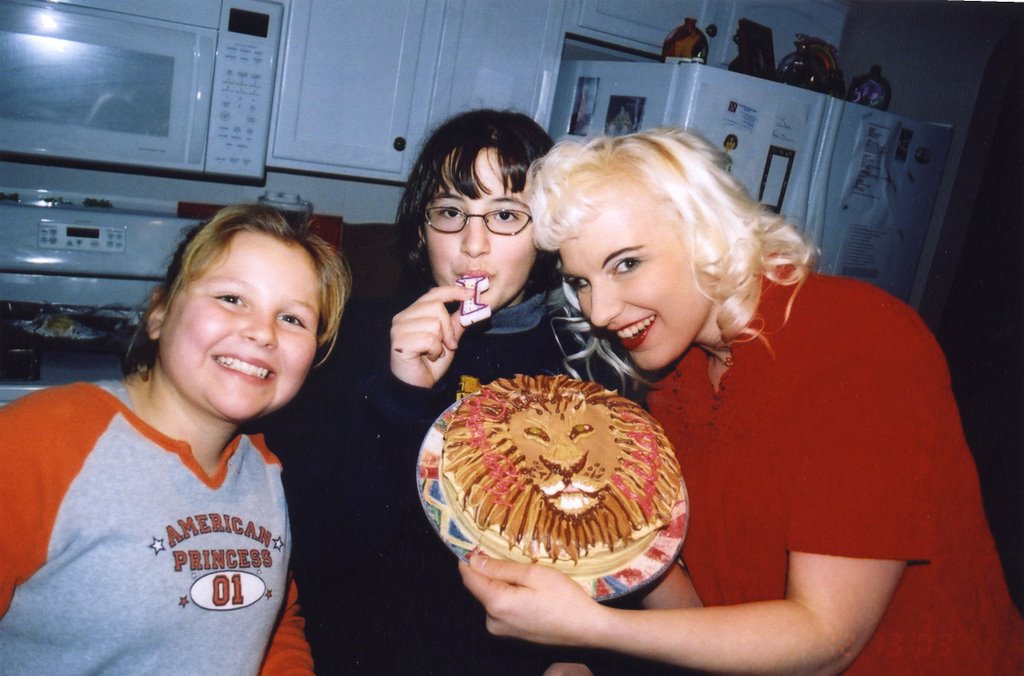

Above are pictures from my favorite birthday... until now! Aren't my stepdaughters lovely? And, isn't my husband handsome? He designed the cake himself, just by looking at the picture. On that day, I couldn't believe that I had gone from being rootless to having such loving connections... Seemed almost too good to be true!
This is my birthday weekend (Dec. 10th) and I am working on a research proposal focusing on foster care alumni and attachment issues.
To understand more about the issues that I will be focusing on:
http://fostercareattachment.blogspot.com
A friend of mine, who is also an alumni of foster care, has a grant to study the health care of foster care alumni, and hopes to incorporate my ideas into his study (re: mental health issues), but I need to get the information to him quickly.
Knowing that this research might actually take place and benefit foster care alumni, by helping them to navigate intimate relationships after a lifetime of interrupted attachments is the best present that I could possibly receive!
Wednesday, December 06, 2006
Lumping kids together doesn't create an atmosphere of safety
Today, I participated in a conference call, which was part of the ongoing training to be a virtual mentor for foster youth through the Orphan Foundation of America.
Three young people who are in the process of aging out of the foster care system were on the line, to share some of their personal experiences. One of them, I knew personally, having met her in October at the It's My Life conference. I recognized her voice right away!
Another young lady named Cherish mentioned that she had entered foster care at age 14, and was placed immediately into an emergency shelter. Why? Because she was older, and it would take time to find a foster care placement for her.
When I heard this, I asked her, "Did you feel safe? Who else was there in the emergency shelter with you?"
Cherish said, no, she definitely did not feel safe. Immediately after her entry in the emergency shelter, she was shocked by the behavior of other residents. One girl there went around breaking picture frames with her fists.
For the duration of time that Cherish spent in temporary shelter placements, she had to walk on eggshells. "There were locks on the doors and the windows -- but you have to share rooms in some of the group homes, and when your roommate is a shoplifter, you end up having to hide your most precious possessions or carry them around with you."
When Cherish entered foster care, it felt to her like her whole life had been turned upside down. "What did I do wrong? I had never been in trouble. I had never committed a crime. It was dangerous on so many different levels. I think there should be different group homes/shelters for different types of girls."
She continued, "Another thing that bothered me were the restrictions. Group homes usually operate by a point-system. Every day, you start out with no privileges at all. You have to clean house or copy out the dictionary just to earn privileges -- that's not how it works in an ordinary home."
Cherish talked about the stigma of being in foster care, "I had always been a good student. School was the one area where I felt safe, and where I excelled. But after I entered the group home, I had to bring notecards to school for teachers to sign. Other students notice things like that, and I was labeled as being a group home girl."
Cherish is currently in college, working towards her MSW. She works two part-time jobs; one of them as a behavioral health professional.
When one of the other participants in the teleconference asked Cherish what motivated her to enter college, Cherish answered, "Because I had been homeless two times. I wanted to be able to take care of myself and my family, and never have to worry about being without food or shelter again."
Three young people who are in the process of aging out of the foster care system were on the line, to share some of their personal experiences. One of them, I knew personally, having met her in October at the It's My Life conference. I recognized her voice right away!
Another young lady named Cherish mentioned that she had entered foster care at age 14, and was placed immediately into an emergency shelter. Why? Because she was older, and it would take time to find a foster care placement for her.
When I heard this, I asked her, "Did you feel safe? Who else was there in the emergency shelter with you?"
Cherish said, no, she definitely did not feel safe. Immediately after her entry in the emergency shelter, she was shocked by the behavior of other residents. One girl there went around breaking picture frames with her fists.
For the duration of time that Cherish spent in temporary shelter placements, she had to walk on eggshells. "There were locks on the doors and the windows -- but you have to share rooms in some of the group homes, and when your roommate is a shoplifter, you end up having to hide your most precious possessions or carry them around with you."
When Cherish entered foster care, it felt to her like her whole life had been turned upside down. "What did I do wrong? I had never been in trouble. I had never committed a crime. It was dangerous on so many different levels. I think there should be different group homes/shelters for different types of girls."
She continued, "Another thing that bothered me were the restrictions. Group homes usually operate by a point-system. Every day, you start out with no privileges at all. You have to clean house or copy out the dictionary just to earn privileges -- that's not how it works in an ordinary home."
Cherish talked about the stigma of being in foster care, "I had always been a good student. School was the one area where I felt safe, and where I excelled. But after I entered the group home, I had to bring notecards to school for teachers to sign. Other students notice things like that, and I was labeled as being a group home girl."
Cherish is currently in college, working towards her MSW. She works two part-time jobs; one of them as a behavioral health professional.
When one of the other participants in the teleconference asked Cherish what motivated her to enter college, Cherish answered, "Because I had been homeless two times. I wanted to be able to take care of myself and my family, and never have to worry about being without food or shelter again."
Tuesday, December 05, 2006
At what point do temporary shelters become long-term?
The Ohio foster care system has recently been under a great deal of scrutiny, and has been receiving national attention. Experts from various states are eager to propose strategies for improvement.
With all the challenges currently faced by the California foster care system, it’s interesting that California-based advocacy groups are finding the time to advise Ohio.
San Diego County detective Victoria Reden conducted a week-long review of three-year-old Marcus’ death. Reden was paid $3,178 plus travel expenses for her study and recommendations.
One of Reden’s recommendations for Ohio was the establishment of a 20-bed receiving center to house abused children temporarily, until they can be matched with foster parents. She referred to the Polinsky Children’s Center, as a California example.
Commissioner Mike Fox and chairman of the Butler County task force Dan Hare say that they are willing to explore that possibility.
But Carole Shauffer, executive director of the San Francisco-based Youth Law Center, recently warned them that while receiving shelters might sound good on the surface, in practice, “They wind up being a warehouse for kids that are difficult to place for some reason.”
Too often, temporary shelters facilities designed to house a small number of children for 30 days or less wind up becoming overcrowded, long-term way-stations.
Child Haven in Clark County is one tragic example. This Nevada facility was designed to hold 84 children and 20 infants. Yet, in June of this year, Child Haven held 205 children; 105 of whom were age 4 and under. Due to overcrowding, many young people were forced to sleep on the gym floor.
Length of stay can also become an issue. The Department of Family Service's policy was that children shouldn't stay at Child Haven longer than two weeks. However, upon investigation, it was revealed that children were remaining in Child Haven much longer. The average stay there was 45 days. One child had been at Child Haven for over two years.
Similar problems have occurred in California. My Nov. 14th blog entry details how LA County’s MacLauren Children’s Center became a dumping ground for emotionally disturbed children and how, since the closing of that center, foster children from toddlers to teens are often been housed overnight in caseworkers waiting rooms.
Sources:
Brooks, Candice. Plans to create temporary housing for abused children draws fire; Critics say ‘receiving shelters’ turn into orphanages that are mentally and socially detrimental to kids. Dayton Daily News, Nov. 22, 2006, p A10.
Kihara, David. Infant dies at Child Haven: Death latest in series of woes for system. Las Vegas Review Journal, August 16, 2006.
Kihara, David. Overcrowding: Child welfare groups warn of lawsuits Youth Law Center demands reforms. Las Vegas Review Journal, August 19, 2006.
McLaughlin, Sheila. Foster care reforms advised; Butler Co. gets list of how it can improve services. Cincinnati, Enquirer, Nov. 23, 2006, Metro pg. C1.
With all the challenges currently faced by the California foster care system, it’s interesting that California-based advocacy groups are finding the time to advise Ohio.
San Diego County detective Victoria Reden conducted a week-long review of three-year-old Marcus’ death. Reden was paid $3,178 plus travel expenses for her study and recommendations.
One of Reden’s recommendations for Ohio was the establishment of a 20-bed receiving center to house abused children temporarily, until they can be matched with foster parents. She referred to the Polinsky Children’s Center, as a California example.
Commissioner Mike Fox and chairman of the Butler County task force Dan Hare say that they are willing to explore that possibility.
But Carole Shauffer, executive director of the San Francisco-based Youth Law Center, recently warned them that while receiving shelters might sound good on the surface, in practice, “They wind up being a warehouse for kids that are difficult to place for some reason.”
Too often, temporary shelters facilities designed to house a small number of children for 30 days or less wind up becoming overcrowded, long-term way-stations.
Child Haven in Clark County is one tragic example. This Nevada facility was designed to hold 84 children and 20 infants. Yet, in June of this year, Child Haven held 205 children; 105 of whom were age 4 and under. Due to overcrowding, many young people were forced to sleep on the gym floor.
Length of stay can also become an issue. The Department of Family Service's policy was that children shouldn't stay at Child Haven longer than two weeks. However, upon investigation, it was revealed that children were remaining in Child Haven much longer. The average stay there was 45 days. One child had been at Child Haven for over two years.
Similar problems have occurred in California. My Nov. 14th blog entry details how LA County’s MacLauren Children’s Center became a dumping ground for emotionally disturbed children and how, since the closing of that center, foster children from toddlers to teens are often been housed overnight in caseworkers waiting rooms.
Sources:
Brooks, Candice. Plans to create temporary housing for abused children draws fire; Critics say ‘receiving shelters’ turn into orphanages that are mentally and socially detrimental to kids. Dayton Daily News, Nov. 22, 2006, p A10.
Kihara, David. Infant dies at Child Haven: Death latest in series of woes for system. Las Vegas Review Journal, August 16, 2006.
Kihara, David. Overcrowding: Child welfare groups warn of lawsuits Youth Law Center demands reforms. Las Vegas Review Journal, August 19, 2006.
McLaughlin, Sheila. Foster care reforms advised; Butler Co. gets list of how it can improve services. Cincinnati, Enquirer, Nov. 23, 2006, Metro pg. C1.
Tuesday, November 28, 2006
Arizona foster care series ended a week too soon

Three "faces of Arizona foster care:" Regina, Christa and Lupe.
An Arizona foster care series in the Payson Roundup demonstrates journalists' commitment to "put a face" on foster care.
In pursuit of this goal, they designated a three-week period to focus on this topic:
1.) During the first week, reporter Michael Maresh spent the day with staff at Child Protective Services.
2.) During the second week, Felicia Megdal interviewed parents who had lost their children.
3.) The third week was earmarked for interviews with foster parents.
Can anyone guess whose viewpoint was missing? If you said foster care youth and alumni, you are correct.
Kudos to the journalists for recognizing that in Arizona today, 9,902 children are living with foster parents. Thanks to them for stepping into the shoes of social workers, foster parents and biological parents, and helping others to empathize with these complicated positions.
I only encourage them to take this courageous journey one step further, by allowing air time for foster care youth and alumni. We are the "consumers" of the foster care system. Our lives are most greatly impacted by the outcome of custodial decisions.
In the future, I encourage the staff of Payson Roundup to add a fourth week to "put a face on foster care." I actually have three faces to share: (see above); three founding members of Foster Care Alumni of America.
Source:
Payton Roundup. Foster care series hopes to put human face on government system. Nov. 17, 2006. http://www.paysonroundup.com/section/opinion/story/26178
Monday, November 20, 2006
Foster Care & Attachment Issues
I'm currently doing a lot of research on foster care and attachment issues:
http://fostercareattachment.blogspot.com/
http://fostercareattachment.blogspot.com/
Friday, November 17, 2006
Dayton, OH, and their foster youth advisory board
Did you know that Chaffee funds require states to have a youth advisory board?
Neither did Franklin County Children Services (in Columbus, Ohio).
Montgomery County Children Services (in Dayton, Ohio) not only has a youth advisory board, but they have actually listened to their suggestions and brought about positive change.
Initiatives of Dayton's foster youth advisory board include:
1.) A holiday ball for foster youth/alumni. The youth advisory board chooses colors, food and theme. Participants choose a Winter Ball king and queen. This is great because foster youth aren't always able to attend Homecoming or prom.
2.) Sibling outings four times per year: The youth advisory board plans the outings. The most recent one took place at Fear Fest. This is fabulous, because often foster youth rarely get the chance to see their siblings, and if they do, it tends to be in a sterile environment.
3.) Teen Welcome Wagon: When teens enter foster care, members of the youth advisory board come over to meet with them and give them a copy of the teen handbook, along with a $5 McDonalds gift card, and offer their support.
4.) Youth advisory board members train foster parents how to deal with teens.
Supportive services provided by Montgomery Children Services include:- Arranging gown/suit donation for the annual Holiday Ball.
- Hiring a DJ and photographer, so that participants of the Holiday Ball leave with photos.
*Education
Montgomery County Children Services provides a high school program on campus, whereby teenager can earn their high school diploma or GED by participating in a digital program. A laundry and kitchen is provided nearby, for convenience.
*TransportationDoris Edelmann has received funding from PCSAO to buy 10 used cars for emancipated foster youth. Along with it will be provided: 6 months worth of insurance, a gas card and a safety kit. There will be an application process, requiring recipients to have completed driver's ed.
*Empowerment
Montgomery County foster youth advisory board members are sent to either the NILA conference or the PATHWAY conference (or both). Before they go, teens are given $100 gift card for Value City to buy professional clothing.
When Doris takes members of the youth advisory board to conferences, she arranges it so that they arrive two days early, in order to get acclimated and explore the area. They're also given an allowance to spend.
Neither did Franklin County Children Services (in Columbus, Ohio).
Montgomery County Children Services (in Dayton, Ohio) not only has a youth advisory board, but they have actually listened to their suggestions and brought about positive change.
Initiatives of Dayton's foster youth advisory board include:
1.) A holiday ball for foster youth/alumni. The youth advisory board chooses colors, food and theme. Participants choose a Winter Ball king and queen. This is great because foster youth aren't always able to attend Homecoming or prom.
2.) Sibling outings four times per year: The youth advisory board plans the outings. The most recent one took place at Fear Fest. This is fabulous, because often foster youth rarely get the chance to see their siblings, and if they do, it tends to be in a sterile environment.
3.) Teen Welcome Wagon: When teens enter foster care, members of the youth advisory board come over to meet with them and give them a copy of the teen handbook, along with a $5 McDonalds gift card, and offer their support.
4.) Youth advisory board members train foster parents how to deal with teens.
Supportive services provided by Montgomery Children Services include:- Arranging gown/suit donation for the annual Holiday Ball.
- Hiring a DJ and photographer, so that participants of the Holiday Ball leave with photos.
*Education
Montgomery County Children Services provides a high school program on campus, whereby teenager can earn their high school diploma or GED by participating in a digital program. A laundry and kitchen is provided nearby, for convenience.
*TransportationDoris Edelmann has received funding from PCSAO to buy 10 used cars for emancipated foster youth. Along with it will be provided: 6 months worth of insurance, a gas card and a safety kit. There will be an application process, requiring recipients to have completed driver's ed.
*Empowerment
Montgomery County foster youth advisory board members are sent to either the NILA conference or the PATHWAY conference (or both). Before they go, teens are given $100 gift card for Value City to buy professional clothing.
When Doris takes members of the youth advisory board to conferences, she arranges it so that they arrive two days early, in order to get acclimated and explore the area. They're also given an allowance to spend.
Thursday, November 16, 2006
Kudos to Judge Carole Clarke
In September of this year, Carole Clark, a Texas family court judge, convened a group of almost 100 child care professionals to conduct an overview of the foster care system in East Texas.
Judge Clark did this to address a myriad of concerns...
- 19,000 children are in the Texas foster care system at any given time.
- 32,500 children passed through the system last year.
- Over the past three years, the number of foster parents in East Texas has decreased by 20%.
- Meanwhile, there has been an increased number of children entering the foster care system, due to family members being hooked on methamphetamine.
- Caseloads are twice as high as they were in 1998, when former Gov. George W. Bush declared the Texas foster care system "in crisis."
- Jobless couples have been taking in as many as 6-8 emotionally disturbed foster children as their primary form of income
After reviewing the current situation in depth, several suggestions were made:
1.) Instituting a cap on foster family size. Texas has four levels of reimbursement for foster care, and payments increase according to the severity of physical or behavioral problems. Right now, foster families can take in up to six "moderately" disturbed children -- and Judge Clark wants to decrease that number to four or fewer.
2.) Stop moving children once they improve: The state's financial incentive is to move foster children who have improved their behavior to homes licensed for less troubled youth. This practice does not benefit the foster child -- rather, it actually encourages the child not to improve, because to do so means another loss of stability.
3.) Shorten the chain of command. Let local CPS workers call the shots about what happens to children. Give the people in the trenches the authority to make decisions.
4.) Stop separating siblings. Panel members realized that for children who have been separated from their parents, siblings often represent the only "family" that they have...
5.) Revisit the idea of group homes. The least popular suggestion that Judge Clark made was for the state to consider creating permanent residential facilities, which might offer more stability than frequent moves between foster homes.
Her idea is for these facilities to be staffed by both hourly shift workers and live-in foster parents.
Why was this suggestion so unpopular?
In philosophies and other schools of thought, people often adhere unquestioningly to one viewpoint, then reject it and, in a knee-jerk reaction, take the polar opposite view.
Over the years, there has been a pendulum swing regarding public opinion towards group homes is concerned.
When I was in foster care in the 1980's, I lived in group homes, due to the shortage of available foster homes and the lack of foster parents who were willing to take in older children. I lived in residential facilities from ages 12 to 16, when I started college.
Group homes weren't perfect. I just wonder at the fact that, rather than trying to fix those problems, many people have rejected group homes altogether.
I think that we have thrown out the baby with the bathwater by trading poorly screened staff at group homes for overloaded caseworkers and poorly screened foster parents.
A teenager residing in a well-run group home for several years with stable staff could build a base of emotional stability. According to the 70 Developmental Assets for youth, teens and tweens need at least one stable adult in their lives that they can rely on.
Why not try it?
I think Smith County should create some group homes for teenagers, and staff them with well-trained professionals. Group home staff should be carefully screened and supervised. Foster care alumni insights should be sought about many issues.
Sometimes considering creative solutions can constitute a risk in losing popularity. It is a worthwhile risk, and I am glad that Judge Clark is taking it.
Source:
Garrett, Robert. Judge sees crisis in foster care; Her panel suggests group homes, more control for CPS workers. Dallas Morning News, Oct. 16, 2006.
Judge Clark did this to address a myriad of concerns...
- 19,000 children are in the Texas foster care system at any given time.
- 32,500 children passed through the system last year.
- Over the past three years, the number of foster parents in East Texas has decreased by 20%.
- Meanwhile, there has been an increased number of children entering the foster care system, due to family members being hooked on methamphetamine.
- Caseloads are twice as high as they were in 1998, when former Gov. George W. Bush declared the Texas foster care system "in crisis."
- Jobless couples have been taking in as many as 6-8 emotionally disturbed foster children as their primary form of income
After reviewing the current situation in depth, several suggestions were made:
1.) Instituting a cap on foster family size. Texas has four levels of reimbursement for foster care, and payments increase according to the severity of physical or behavioral problems. Right now, foster families can take in up to six "moderately" disturbed children -- and Judge Clark wants to decrease that number to four or fewer.
2.) Stop moving children once they improve: The state's financial incentive is to move foster children who have improved their behavior to homes licensed for less troubled youth. This practice does not benefit the foster child -- rather, it actually encourages the child not to improve, because to do so means another loss of stability.
3.) Shorten the chain of command. Let local CPS workers call the shots about what happens to children. Give the people in the trenches the authority to make decisions.
4.) Stop separating siblings. Panel members realized that for children who have been separated from their parents, siblings often represent the only "family" that they have...
5.) Revisit the idea of group homes. The least popular suggestion that Judge Clark made was for the state to consider creating permanent residential facilities, which might offer more stability than frequent moves between foster homes.
Her idea is for these facilities to be staffed by both hourly shift workers and live-in foster parents.
Why was this suggestion so unpopular?
In philosophies and other schools of thought, people often adhere unquestioningly to one viewpoint, then reject it and, in a knee-jerk reaction, take the polar opposite view.
Over the years, there has been a pendulum swing regarding public opinion towards group homes is concerned.
When I was in foster care in the 1980's, I lived in group homes, due to the shortage of available foster homes and the lack of foster parents who were willing to take in older children. I lived in residential facilities from ages 12 to 16, when I started college.
Group homes weren't perfect. I just wonder at the fact that, rather than trying to fix those problems, many people have rejected group homes altogether.
I think that we have thrown out the baby with the bathwater by trading poorly screened staff at group homes for overloaded caseworkers and poorly screened foster parents.
A teenager residing in a well-run group home for several years with stable staff could build a base of emotional stability. According to the 70 Developmental Assets for youth, teens and tweens need at least one stable adult in their lives that they can rely on.
Why not try it?
I think Smith County should create some group homes for teenagers, and staff them with well-trained professionals. Group home staff should be carefully screened and supervised. Foster care alumni insights should be sought about many issues.
Sometimes considering creative solutions can constitute a risk in losing popularity. It is a worthwhile risk, and I am glad that Judge Clark is taking it.
Source:
Garrett, Robert. Judge sees crisis in foster care; Her panel suggests group homes, more control for CPS workers. Dallas Morning News, Oct. 16, 2006.
Tuesday, November 14, 2006
Foster Children & Emergency Shelters
The ideal vs. reality
Ideally, all teenagers would be linked with loving, permanent families before aging out of foster care. Realistically, that doesn't always happen.
More often, teens in foster care find themselves bouncing between various placements -- and sometimes, when a "bed" is not available elsewhere, spending time in an emergency shelter.
Imagine that you are a displaced teenager spending the night in an emergency shelter. What risks might you face? Would you be raped by a resident or staff member? Robbed? Beaten?
Would you emerge from that experience physically or emotionally scarred?
None of these groups is just like the other...
Consider the diverse populations that are often housed together in emergency shelters: juvenile delinquents, emotionally disturbed children and victims of child abuse.
All three populations are treated the same. That means that a physically or sexually abused child who enters an emergency shelter is treated the same as a juvenile offender.
This creates a dangerous and unhealthy environment, where healing is absent, victimization is frequent and supervision is often inadequate. Shelters can traumatize children, and often provide a breeding ground for abuse. Why remove abused teenagers from one unsafe situation, only to house them in another?
Don't call it "shelter"
-Oak Hill Homes, an emergency shelter in Georgia with lax security measures, became a virtual recruiting ground for pimps seeking underage prostitutes. Meanwhile, at a nearby shelter for boys, two workers were fired for getting into a fight with a resident.
-MacLauren Children's Center, in LA County, became a dumping ground for emotionally disturbed children. Employees were untrained to provide mental health services. Instead, they used physical restraint an average of four times per day -- causing broken limbs and other injuries.
It's all about the money
When people in power fail to invest in long-term solutions, facilities designed to house a small number of children for 30 days or less end up becoming long-term way-stations.
Licensed to take in a certain number of children, emergency shelters often end up over capacity. In terms of staffing, both pay and qualifications are often minimal.
The first solution that many state officials suggest is "privatizing." Unlike county-run facilities, private group homes and shelters are required to be licensed. However, like county-run facilities, private shelters need funding and expect some financial assistance from the government.
Licensing regulations supposedly prohibit overcrowding, limit the use of physical restraints and establish minimal staff qualifications and training. However, in Washington D.C., five private "respite centers" proved themselves to be just as inept and unsafe as county-run emergency shelters.
Finding them "a bed"
After the MacLauren Children's Center was closed, foster children (from toddlers to teens) were often housed overnight in the waiting room of an office building, waiting for their LA County social workers to find them a "bed."
Not a "family," adoptive or foster. Not the "best match." Not someone who might care for them and love them. Just a bed; someplace to spend the night. Not knowing where they'd be tomorrow.
This practice has been reported as recently as 2005, when six foster youth waiting in the office ran away.
Interestingly, in New York, some teenagers refused to leave their caseworker's office, finding it safer and more welcoming than the foster and group homes to which they were assigned.
Sources
Editorials: Georgia's foster children: Fewer shelters, more dollars a better mix for abused kids. Atlanta Journal, Oct. 24, 2002, p. A20.
Horowtiz, Sari. Short-term shelters for children under fire. Washington Post, Nov. 18, 2001, pgC1.
Larrubia, Evelyn. The state; foster children slept in office... Los Angeles Times, May 7, 2005.
Leonard, Jack. 6 foster kids have fled office... Los Angeles Times, May 21, 2005, pgB1.
Martz, Ron. Child advocate: Shelter funding, security poor. Atlanta Journal, May 20, 2001, pgF1.
Rainey, James. Action urged on homes for troubled youths; shelter: Advocates call on L.A. County to expedite separation of the emotionally disturbed from delinquents. Los Angeles Times, Oct. 14, 1997.
Rivera, Carla. Suit targets counties' shelters for children...overcrowded and dangerous. Los Angeles Times, Dec. 19, 2000, pgB1.
Swarns, Rachel. For children, another night on office cots. New York Times, Nov. 28, 1997, pgB1.
Thevenot, Carri. Plan to cut number of children in institutional care progresses. Las Vegas Review, Nov. 4, 2006, pgB1.
Ideally, all teenagers would be linked with loving, permanent families before aging out of foster care. Realistically, that doesn't always happen.
More often, teens in foster care find themselves bouncing between various placements -- and sometimes, when a "bed" is not available elsewhere, spending time in an emergency shelter.
Imagine that you are a displaced teenager spending the night in an emergency shelter. What risks might you face? Would you be raped by a resident or staff member? Robbed? Beaten?
Would you emerge from that experience physically or emotionally scarred?
None of these groups is just like the other...
Consider the diverse populations that are often housed together in emergency shelters: juvenile delinquents, emotionally disturbed children and victims of child abuse.
All three populations are treated the same. That means that a physically or sexually abused child who enters an emergency shelter is treated the same as a juvenile offender.
This creates a dangerous and unhealthy environment, where healing is absent, victimization is frequent and supervision is often inadequate. Shelters can traumatize children, and often provide a breeding ground for abuse. Why remove abused teenagers from one unsafe situation, only to house them in another?
Don't call it "shelter"
-Oak Hill Homes, an emergency shelter in Georgia with lax security measures, became a virtual recruiting ground for pimps seeking underage prostitutes. Meanwhile, at a nearby shelter for boys, two workers were fired for getting into a fight with a resident.
-MacLauren Children's Center, in LA County, became a dumping ground for emotionally disturbed children. Employees were untrained to provide mental health services. Instead, they used physical restraint an average of four times per day -- causing broken limbs and other injuries.
It's all about the money
When people in power fail to invest in long-term solutions, facilities designed to house a small number of children for 30 days or less end up becoming long-term way-stations.
Licensed to take in a certain number of children, emergency shelters often end up over capacity. In terms of staffing, both pay and qualifications are often minimal.
The first solution that many state officials suggest is "privatizing." Unlike county-run facilities, private group homes and shelters are required to be licensed. However, like county-run facilities, private shelters need funding and expect some financial assistance from the government.
Licensing regulations supposedly prohibit overcrowding, limit the use of physical restraints and establish minimal staff qualifications and training. However, in Washington D.C., five private "respite centers" proved themselves to be just as inept and unsafe as county-run emergency shelters.
Finding them "a bed"
After the MacLauren Children's Center was closed, foster children (from toddlers to teens) were often housed overnight in the waiting room of an office building, waiting for their LA County social workers to find them a "bed."
Not a "family," adoptive or foster. Not the "best match." Not someone who might care for them and love them. Just a bed; someplace to spend the night. Not knowing where they'd be tomorrow.
This practice has been reported as recently as 2005, when six foster youth waiting in the office ran away.
Interestingly, in New York, some teenagers refused to leave their caseworker's office, finding it safer and more welcoming than the foster and group homes to which they were assigned.
Sources
Editorials: Georgia's foster children: Fewer shelters, more dollars a better mix for abused kids. Atlanta Journal, Oct. 24, 2002, p. A20.
Horowtiz, Sari. Short-term shelters for children under fire. Washington Post, Nov. 18, 2001, pgC1.
Larrubia, Evelyn. The state; foster children slept in office... Los Angeles Times, May 7, 2005.
Leonard, Jack. 6 foster kids have fled office... Los Angeles Times, May 21, 2005, pgB1.
Martz, Ron. Child advocate: Shelter funding, security poor. Atlanta Journal, May 20, 2001, pgF1.
Rainey, James. Action urged on homes for troubled youths; shelter: Advocates call on L.A. County to expedite separation of the emotionally disturbed from delinquents. Los Angeles Times, Oct. 14, 1997.
Rivera, Carla. Suit targets counties' shelters for children...overcrowded and dangerous. Los Angeles Times, Dec. 19, 2000, pgB1.
Swarns, Rachel. For children, another night on office cots. New York Times, Nov. 28, 1997, pgB1.
Thevenot, Carri. Plan to cut number of children in institutional care progresses. Las Vegas Review, Nov. 4, 2006, pgB1.
Monday, November 06, 2006
One-stop-shopping for emancipated foster youth
Everyone has their favorite landmark in Texas. What's yours? Big Bend National Park? The Alamo?
After attending the fourth annual "It's My Life" conference, my favorite place in Texas is now the Houston Alumni and Youth (H.A.Y.) Center.
The H.A.Y. Center provides one-stop-shopping for foster youth and alumni, between the ages of 16 to 21.
Services include:
- Mentoring and counseling services, including drug/alcohol abuse counseling
- GED / college preparation courses
- Assistance locating housing
- Advanced job placement training
- A computer lab, mailboxes, voice mail and email
The one-stop-shopping approach is so important. It eliminates gaps in services. It doesn't force people in and from foster care to traverse from one place to another in order to get the help that they need.
In Ohio, where I live, there are 88 counties, each with differing services. One of my first projects for the Foster Care Alumni of America pilot chapter will be to lay the groundwork for a statewide yellow pages, so at least we will know where resources are located and where the gaps in services are for people in and from foster care... I am hoping that FirstLink will agree to partner with us on this effort.
The H.A.Y. Center offers leadership opportunities for foster youth and alumni.
I first met Victor, Xavier and Gabbie at the airport. We were preparing to board a plane, en route from Houston to Seattle. We were on our way to attend the 2006 "It's My Life" conference.
I wish you could have been there to attend H.A.Y. Center's workshop, and to hear the voices of foster care alumni:
Imagine meeting a talented young man named Victor. He once was homeless -- but he is now a talented photographer, constantly honing his skills. Not only has he pulled his own life together, but he is dedicated to helping others.
Meet Xavier, future filmmaker. Hear him share what attracts him to the medium of film. Watch a "short" that he has created. When Xavier shares his experiences from foster care in his films, his approach will be subtle, but his message will resonate.
And, allow me to introduce you to Gabbie. She is gentle, approachable and fun. She grew up in foster care, and now her goal is to make the path easier for others. As such, she is now a Youth Specialist with the Texas Department of Family and Protective Services.
Gabbie is quick to dismiss herself in the light of Victor and Xavier's artistic talents -- but Gabbie's gifts are interpersonal. She has the type of warm and accepting personality that if I ever had a problem, I would feel comfortable sharing it with her.
I plan to post pictures of the three of them soon...
I'd like to extend my thanks to wonderful people like Pamela Walker, Assistant Director of the H.A.Y. Center. It took work to set up collaborations with Harris County Youth Services, Texas Apartment Locators, the Texas Work Commission, DePelchin Children's Center, and so many others in order to make this endeavor a success.
It takes patience and diligence both to establish this kind of center, and to follow-through with everyday operations.
And it takes a certain degree of humility to facilitate alumni and youth leadership in workshops and discussions... taking a step back from being in the limelight, and focusing your efforts to make foster youth and alumni shine!
Kudos to the H.A.Y. Center, my favorite Texas landmark. For more information, please visit: http://www.reg6palhouston.org/
After attending the fourth annual "It's My Life" conference, my favorite place in Texas is now the Houston Alumni and Youth (H.A.Y.) Center.
The H.A.Y. Center provides one-stop-shopping for foster youth and alumni, between the ages of 16 to 21.
Services include:
- Mentoring and counseling services, including drug/alcohol abuse counseling
- GED / college preparation courses
- Assistance locating housing
- Advanced job placement training
- A computer lab, mailboxes, voice mail and email
The one-stop-shopping approach is so important. It eliminates gaps in services. It doesn't force people in and from foster care to traverse from one place to another in order to get the help that they need.
In Ohio, where I live, there are 88 counties, each with differing services. One of my first projects for the Foster Care Alumni of America pilot chapter will be to lay the groundwork for a statewide yellow pages, so at least we will know where resources are located and where the gaps in services are for people in and from foster care... I am hoping that FirstLink will agree to partner with us on this effort.
The H.A.Y. Center offers leadership opportunities for foster youth and alumni.
I first met Victor, Xavier and Gabbie at the airport. We were preparing to board a plane, en route from Houston to Seattle. We were on our way to attend the 2006 "It's My Life" conference.
I wish you could have been there to attend H.A.Y. Center's workshop, and to hear the voices of foster care alumni:
Imagine meeting a talented young man named Victor. He once was homeless -- but he is now a talented photographer, constantly honing his skills. Not only has he pulled his own life together, but he is dedicated to helping others.
Meet Xavier, future filmmaker. Hear him share what attracts him to the medium of film. Watch a "short" that he has created. When Xavier shares his experiences from foster care in his films, his approach will be subtle, but his message will resonate.
And, allow me to introduce you to Gabbie. She is gentle, approachable and fun. She grew up in foster care, and now her goal is to make the path easier for others. As such, she is now a Youth Specialist with the Texas Department of Family and Protective Services.
Gabbie is quick to dismiss herself in the light of Victor and Xavier's artistic talents -- but Gabbie's gifts are interpersonal. She has the type of warm and accepting personality that if I ever had a problem, I would feel comfortable sharing it with her.
I plan to post pictures of the three of them soon...
I'd like to extend my thanks to wonderful people like Pamela Walker, Assistant Director of the H.A.Y. Center. It took work to set up collaborations with Harris County Youth Services, Texas Apartment Locators, the Texas Work Commission, DePelchin Children's Center, and so many others in order to make this endeavor a success.
It takes patience and diligence both to establish this kind of center, and to follow-through with everyday operations.
And it takes a certain degree of humility to facilitate alumni and youth leadership in workshops and discussions... taking a step back from being in the limelight, and focusing your efforts to make foster youth and alumni shine!
Kudos to the H.A.Y. Center, my favorite Texas landmark. For more information, please visit: http://www.reg6palhouston.org/
Sunday, November 05, 2006
What's going on with Australia and foster care?
I shall continue to post my notes and updates on contacts from the 2006 It's My Life conference. However, several articles about the foster care situation in Australia have recently captured my attention...
Alienating foster parents winds up hurting the kids
In Australia, the NSW Foster Care Association ordered a boycott yesterday in response to changes in the law. Up to 1,000 foster parents are predicted to quit the system, and hundreds more will refuse to provide emergency refuge for at-risk children.
The Department of Human Services wants to disclose the personal details of 10,000 foster parents and their families to birth parents with a history of violence and abuse.
Information would include foster parents' names, addresses, telephone numbers and workplace, as well as details relating to foster parents' birth children.
Community Services Minister Reba Meagher did not consult foster parents about the issue.
This news came just days after a large billboard was unveiled in Sydney, calling for more foster parents to volunteer over Christmas.
Foster Care Association president Mary Jane Beach responded that,"The people who draft these laws have no idea of the implications. They think it's like a family picnic."
Another proposed law, which was more popular with foster parents, would allow foster parents to adopt their foster children without the consent of birth parents. Beach said, "For too long, the interest of birth parents has been placed before the children."
In New Zealand, for example, over 23% of foster children lived in three or more foster homes in the past 12 months. 156 children were passed around 6 or more homes. Dozens were shifted between 8-11 homes within one year. These children need and deserve permanency.
Foster parents in the land down under have expressed an urgent need for better respite care, in order to provide time off when they need it.
Compensation for kinship care providers is also an issue
It is estimated that, in Tasmania, 8,000 children are currently being raised by their grandparents and that number is growing all the time.
Custodial grandparents save the state a lot of money -- especially since the 2003 federal goverment recommendation that kinship care providers receive the same financial support of foster parents has apparently been disregarded.
According to the articles cited below:
Custodial grandparents in Tasmania receive $28 fortnightly
Australian foster parents receive between $374 and $564 a fortnight, depending on the age of the child.
Curious to know what a 'fortnight' is? Every two weeks.
The rate for kinship care compensation has not increased over the past 15 years.
Lack of oversight leads to death
Baby Elizabeth Edwards didn't have to die. Her death was neither willful nor malicious -- just plain ignorance. Elizabeth was placed by her foster mother in a cot with a bottle in her mouth and surrounded by a U-shaped pillow.
The baby suffocated and choked on the contents of her stomach. Her foster mother wasn't an evil woman. She was trying to do a good thing. But, foster mother Janet Todd had never been educated about sudden infant death syndrome.
South Australia's only foster care placement organization is Anglicare SA. This organization has no minimum level of training for foster parents. Their training courses do not include infant care.
"Our training has tended to focus on attachment, loss and grief, behaviour management and the traumas associated with placement," Anglicare manager, Margie Battye, told the court. She said that Anglicare did not have the budget and resources to provide infant care training.
Tell that to baby Elizabeth.
Australia's foster care system is a problem that is not going to go away. The number of children needing foster care has increased from 15,000 to 23,000 over the past five years. Meanwhile, the number of available foster parents has dropped from 14,000 to 9000.
Sources
Edwards, Verity. Foster mum had no baby-care training: Foster parents were not shown how to care for babies before a nine-month-old girl died while in care in 2004, a welfare group has admitted. The Australian, Nov. 2, 2006.
O'Dwyer, Erin. Worried foster parents in revolt over new rules. The Sydney Morning Herald, Nov. 5, 2006.
Labour talk is cheap on foster care. Press release by United Future New Zealand Party, Oct. 31, 2006.
Vowles, Gill. Care shame: Tasmania's custodial grandparents are still waiting to get equity with foster carers four years after being promised it by the state and federal goverments. The Sunday Tasmanian, Oct. 29, 2006.
Alienating foster parents winds up hurting the kids
In Australia, the NSW Foster Care Association ordered a boycott yesterday in response to changes in the law. Up to 1,000 foster parents are predicted to quit the system, and hundreds more will refuse to provide emergency refuge for at-risk children.
The Department of Human Services wants to disclose the personal details of 10,000 foster parents and their families to birth parents with a history of violence and abuse.
Information would include foster parents' names, addresses, telephone numbers and workplace, as well as details relating to foster parents' birth children.
Community Services Minister Reba Meagher did not consult foster parents about the issue.
This news came just days after a large billboard was unveiled in Sydney, calling for more foster parents to volunteer over Christmas.
Foster Care Association president Mary Jane Beach responded that,"The people who draft these laws have no idea of the implications. They think it's like a family picnic."
Another proposed law, which was more popular with foster parents, would allow foster parents to adopt their foster children without the consent of birth parents. Beach said, "For too long, the interest of birth parents has been placed before the children."
In New Zealand, for example, over 23% of foster children lived in three or more foster homes in the past 12 months. 156 children were passed around 6 or more homes. Dozens were shifted between 8-11 homes within one year. These children need and deserve permanency.
Foster parents in the land down under have expressed an urgent need for better respite care, in order to provide time off when they need it.
Compensation for kinship care providers is also an issue
It is estimated that, in Tasmania, 8,000 children are currently being raised by their grandparents and that number is growing all the time.
Custodial grandparents save the state a lot of money -- especially since the 2003 federal goverment recommendation that kinship care providers receive the same financial support of foster parents has apparently been disregarded.
According to the articles cited below:
Custodial grandparents in Tasmania receive $28 fortnightly
Australian foster parents receive between $374 and $564 a fortnight, depending on the age of the child.
Curious to know what a 'fortnight' is? Every two weeks.
The rate for kinship care compensation has not increased over the past 15 years.
Lack of oversight leads to death
Baby Elizabeth Edwards didn't have to die. Her death was neither willful nor malicious -- just plain ignorance. Elizabeth was placed by her foster mother in a cot with a bottle in her mouth and surrounded by a U-shaped pillow.
The baby suffocated and choked on the contents of her stomach. Her foster mother wasn't an evil woman. She was trying to do a good thing. But, foster mother Janet Todd had never been educated about sudden infant death syndrome.
South Australia's only foster care placement organization is Anglicare SA. This organization has no minimum level of training for foster parents. Their training courses do not include infant care.
"Our training has tended to focus on attachment, loss and grief, behaviour management and the traumas associated with placement," Anglicare manager, Margie Battye, told the court. She said that Anglicare did not have the budget and resources to provide infant care training.
Tell that to baby Elizabeth.
Australia's foster care system is a problem that is not going to go away. The number of children needing foster care has increased from 15,000 to 23,000 over the past five years. Meanwhile, the number of available foster parents has dropped from 14,000 to 9000.
Sources
Edwards, Verity. Foster mum had no baby-care training: Foster parents were not shown how to care for babies before a nine-month-old girl died while in care in 2004, a welfare group has admitted. The Australian, Nov. 2, 2006.
O'Dwyer, Erin. Worried foster parents in revolt over new rules. The Sydney Morning Herald, Nov. 5, 2006.
Labour talk is cheap on foster care. Press release by United Future New Zealand Party, Oct. 31, 2006.
Vowles, Gill. Care shame: Tasmania's custodial grandparents are still waiting to get equity with foster carers four years after being promised it by the state and federal goverments. The Sunday Tasmanian, Oct. 29, 2006.
Saturday, November 04, 2006
Foster Youth Need Both Independence and Permanency
Independence and Permanency – Can Youth in Care Have Both?
Notes from It's My Life Conference 2006
*Please note: The panel was made up of very fortunate youth. If you are linked with a wonderful foster family, legalization might not constitute a big issue. Not everyone is that fortunate. It would have been interesting to also hear from non-Casey foster youth.
Ideal for youth in care to have:
1.) Lifelong family relationships
2.) Adequate preparation for adulthood
*Definition of “permanence:” remaining until the end; indestructible (a stable mind in a stable place)
*Definition of “independence:” capable of thinking or acting for one self
What is “family?”
Nebulous definition; “people who are there for you all the time”
Biological vs. “chosen” family
Some youth are never adopted or linked with a long-term foster family; some age out of residential facilities.
How important is a legal family? Adoption can provide a last name and legal rights
Supporting and establishing a "circle of support"
Who should be involved and when should it start? As soon as possible! Emphasize the importance at an early age. Search out people with whom young person feels comfortable.
Start networking and information gathering from the time that a youth enters foster care. This needs to be forethought, not an afterthought. Empower the young person and involve them in the thought process and decision-making.
Perhaps the young person isn’t ready to think about a permanent placement yet. They might have the mindset of: “Why work on permanence when I don’t even have a home?” It's a bad idea to wait until young person finds a permanent foster home because that might never happen.
Youth-in-care need an entire web of connections; not just one person. This could include a mentor, therapist, peers, fellow alumni... You can’t put all your eggs in one basket, because that person might die or move away.
Most representatives on the panel were approximately 17 years old. I really see the need for a continuum of ages (FCAA). What I have learned as a 33-year-old alumna of foster care is that permanence and independence can be tenuous and fragile:
1.) If there are no legal ties, support networks can drift apart over time (especially if you move out of state; which many people do when attending / graduating from college)
2.) You might have to re-establish a support network / safety net later on – so it’s important to build the skills to do that, not just once, but over and over again
Difficult to explain confusing relationships to people from traditional (“normal”) families… Tough questions; it can be seem unfair and painful to have to explain over and over… Uncomfortable to have to educate other people.
Measured disclosure: Foster youth and alumni often err on one side or the other; “over-share” vs. “’under-share.” If no success stories are told, negative stereotypes and stigmas will continue to exist. On the other hand, too much disclosure can make other people feel uncomfortable.
1.) For those who over-share: Consider utilizing discretion.
Realize that it is a risk whenever you share your story with other people. There are wolves and predators out there who might try to take advantage of you; they hear your story and assume you might be emotionally (and hence sexually) vulnerable.
A job interview might not be the best time to bring it up either. Try to keep a balanced, professional relationship at work, and don’t ask for special favors. At my job, I took time to prove myself before sharing that I had grown up in foster care.
2.) For those who under-share: Summon up your courage and wait for the right opportunity. Take one small step out of your comfort zone.
If the only thing that people see is negative behavior coming from foster youth and alumni, they will never have the opportunity to witness our strengths and success, and to open their minds.
Notes from It's My Life Conference 2006
*Please note: The panel was made up of very fortunate youth. If you are linked with a wonderful foster family, legalization might not constitute a big issue. Not everyone is that fortunate. It would have been interesting to also hear from non-Casey foster youth.
Ideal for youth in care to have:
1.) Lifelong family relationships
2.) Adequate preparation for adulthood
*Definition of “permanence:” remaining until the end; indestructible (a stable mind in a stable place)
*Definition of “independence:” capable of thinking or acting for one self
What is “family?”
Nebulous definition; “people who are there for you all the time”
Biological vs. “chosen” family
Some youth are never adopted or linked with a long-term foster family; some age out of residential facilities.
How important is a legal family? Adoption can provide a last name and legal rights
Supporting and establishing a "circle of support"
Who should be involved and when should it start? As soon as possible! Emphasize the importance at an early age. Search out people with whom young person feels comfortable.
Start networking and information gathering from the time that a youth enters foster care. This needs to be forethought, not an afterthought. Empower the young person and involve them in the thought process and decision-making.
Perhaps the young person isn’t ready to think about a permanent placement yet. They might have the mindset of: “Why work on permanence when I don’t even have a home?” It's a bad idea to wait until young person finds a permanent foster home because that might never happen.
Youth-in-care need an entire web of connections; not just one person. This could include a mentor, therapist, peers, fellow alumni... You can’t put all your eggs in one basket, because that person might die or move away.
Most representatives on the panel were approximately 17 years old. I really see the need for a continuum of ages (FCAA). What I have learned as a 33-year-old alumna of foster care is that permanence and independence can be tenuous and fragile:
1.) If there are no legal ties, support networks can drift apart over time (especially if you move out of state; which many people do when attending / graduating from college)
2.) You might have to re-establish a support network / safety net later on – so it’s important to build the skills to do that, not just once, but over and over again
Difficult to explain confusing relationships to people from traditional (“normal”) families… Tough questions; it can be seem unfair and painful to have to explain over and over… Uncomfortable to have to educate other people.
Measured disclosure: Foster youth and alumni often err on one side or the other; “over-share” vs. “’under-share.” If no success stories are told, negative stereotypes and stigmas will continue to exist. On the other hand, too much disclosure can make other people feel uncomfortable.
1.) For those who over-share: Consider utilizing discretion.
Realize that it is a risk whenever you share your story with other people. There are wolves and predators out there who might try to take advantage of you; they hear your story and assume you might be emotionally (and hence sexually) vulnerable.
A job interview might not be the best time to bring it up either. Try to keep a balanced, professional relationship at work, and don’t ask for special favors. At my job, I took time to prove myself before sharing that I had grown up in foster care.
2.) For those who under-share: Summon up your courage and wait for the right opportunity. Take one small step out of your comfort zone.
If the only thing that people see is negative behavior coming from foster youth and alumni, they will never have the opportunity to witness our strengths and success, and to open their minds.
Friday, November 03, 2006
Lisa's flower costume at Casey conference

Part of the "It's My Life" conference included a Halloween party. I had sewn my flower costume ahead of time (created my own pattern and everything).
As it turned out, I was unable to attend the party, because of setting up everything for the Living Room, but I wore this in the Living Room that night for the youth activities.
Lots of the foster youth wore their costumes, too, but I was unable to take photos of them due to legal concerns (chaperones couldn't sign photo releases, and there was a risk that if I had taken photos, future youth wouldn't have been allowed to attend).
Wednesday, November 01, 2006
2006 It's My Life conference - Lisa's experience
I have had the most amazing time at the 2006 It's My Life Conference, sponsored by the Casey Foundation. This is their 4th annual conference to support youth aging out of foster care. I attended for the first time.
Friday night, the night before my flight, I got a call from Foster Care Alumni of America asking me to take charge of all the youth activities in the "Living Room," since Misty Stenslie, the person in charge, was very sick. I said, yes.
It was a lot of work... The phrase "sleepless in Seattle" has an entirely new meaning for me now, because I totally didn't get much sleep.
But it was so rewarding and so much fun! After my flight arrived on Saturday, I sorted through the boxes that had been Fed-Exed to me and pulled everything together, including creating an outline of shifts for volunteers to help me supervise the Living Room.
Activities: There were two afternoon workshops on Sunday and Monday. On Sunday night, I hosted an ice cream social, as well as other activities. One Monday night, we had a karaoke and DDR (Dance Dance Revolution) contest and the winner got to keep the Play Station, mike and software.
Tuesday morning, I announced the prizes for participants who had made postcards to share a part of their experience in foster care. We did a drawing; prizes included an ipod, digital camera, Best Buy gift cards, Target gifts cards and coupons for various fast food establishments.
I had lots of food coupons and so I was able to reward youth for taking on leadership roles, such as judging the contest, and also reward chaperones who volunteered to work shifts helping to supervise the Living Room activities.
I also met the most amazing people. Back in 1989, when I aged out of foster care at age 16, I felt very alone (at least for the first two years, until I moved into a Methodist dorm and was surrounded by college friends who became my "family").
Spending so much time with foster youth, I heard many of their stories... I was both happy to hear of how things in foster care have progressed in some areas, and saddened to hear how they still need to be improved in others.
The three-day conference was filled with interesting contacts and conversations -- drama and adventures... I left feeling very exhausted, but also rejuvenated and incredibly happy.
I will share what I have learned in upcoming blog entries...
Friday night, the night before my flight, I got a call from Foster Care Alumni of America asking me to take charge of all the youth activities in the "Living Room," since Misty Stenslie, the person in charge, was very sick. I said, yes.
It was a lot of work... The phrase "sleepless in Seattle" has an entirely new meaning for me now, because I totally didn't get much sleep.
But it was so rewarding and so much fun! After my flight arrived on Saturday, I sorted through the boxes that had been Fed-Exed to me and pulled everything together, including creating an outline of shifts for volunteers to help me supervise the Living Room.
Activities: There were two afternoon workshops on Sunday and Monday. On Sunday night, I hosted an ice cream social, as well as other activities. One Monday night, we had a karaoke and DDR (Dance Dance Revolution) contest and the winner got to keep the Play Station, mike and software.
Tuesday morning, I announced the prizes for participants who had made postcards to share a part of their experience in foster care. We did a drawing; prizes included an ipod, digital camera, Best Buy gift cards, Target gifts cards and coupons for various fast food establishments.
I had lots of food coupons and so I was able to reward youth for taking on leadership roles, such as judging the contest, and also reward chaperones who volunteered to work shifts helping to supervise the Living Room activities.
I also met the most amazing people. Back in 1989, when I aged out of foster care at age 16, I felt very alone (at least for the first two years, until I moved into a Methodist dorm and was surrounded by college friends who became my "family").
Spending so much time with foster youth, I heard many of their stories... I was both happy to hear of how things in foster care have progressed in some areas, and saddened to hear how they still need to be improved in others.
The three-day conference was filled with interesting contacts and conversations -- drama and adventures... I left feeling very exhausted, but also rejuvenated and incredibly happy.
I will share what I have learned in upcoming blog entries...
Thursday, October 26, 2006
It's My Life conference for youth aging out of foster care
I apologize if my blog entries have been less frequent... I have been preparing to attend and assist with an upcoming conference in Seattle...
I vividly remember my entry into the adult world. It was the summer of 1989. I had been living in a group home, and the director's son had crept into my room, late in the night, and violated me. When I spoke to the director about what had happened, his primary concern was liability. He sent his son to the military, and kicked me out of the group home.
I was sixteen years old. I had just been raped. Now, I didn't know where I was going to live. I felt like I was being punished for not being strong enough to defend myself against what was happening to me.
In one of the most supreme examples of divine providence of my life, I ended up starting college that fall. A sixty-year-old woman whom I had known in my childhood agreed to be my temporary guardian. The following year, I was legally emancipated and moved into my first apartment.
I was book-smart and life-dumb. I didn't know how to cook. The food at the group had just been delivered to us, mysteriously, like manna from above. I didn't know how to budget, nor how to drive. Not to mention the emotional baggage that I was carrying around with me.
It was a long journey from where I was back then to the person I am today. For two weeks, I was homeless. For eight years, I was afraid to date. I often despaired of ever having a family of my own.
Now, I have a husband and two stepdaughters. Would you like to see them? Please visit www.sunshinegirlonarainyday.com or www.nofearinlove.com
My husband is a songwriter. Would you like to hear his music? Please visit www.nathansbrain.com
I went from a place of being unwanted to being sheltered and needed and loved. I achieved my college and graduate level degree. At this time, I am incredibly happy with my life.
And yet...
I worry about current foster children, and people who have aged out of care. Why must the journey be so difficult and treacherous? Couldn't we do something to make the path easier for teens aging out of foster care to travel?
That's why I'm so excited about volunteering to assist with the fourth annual "It's My Life" conference. Because its purpose is to assist youth who are transitioning from foster care to adulthood. I promise to share a full report when I get back!
For more information, please visit:
http://www.casey.org/Resources/Projects/ItsMyLife/
I vividly remember my entry into the adult world. It was the summer of 1989. I had been living in a group home, and the director's son had crept into my room, late in the night, and violated me. When I spoke to the director about what had happened, his primary concern was liability. He sent his son to the military, and kicked me out of the group home.
I was sixteen years old. I had just been raped. Now, I didn't know where I was going to live. I felt like I was being punished for not being strong enough to defend myself against what was happening to me.
In one of the most supreme examples of divine providence of my life, I ended up starting college that fall. A sixty-year-old woman whom I had known in my childhood agreed to be my temporary guardian. The following year, I was legally emancipated and moved into my first apartment.
I was book-smart and life-dumb. I didn't know how to cook. The food at the group had just been delivered to us, mysteriously, like manna from above. I didn't know how to budget, nor how to drive. Not to mention the emotional baggage that I was carrying around with me.
It was a long journey from where I was back then to the person I am today. For two weeks, I was homeless. For eight years, I was afraid to date. I often despaired of ever having a family of my own.
Now, I have a husband and two stepdaughters. Would you like to see them? Please visit www.sunshinegirlonarainyday.com or www.nofearinlove.com
My husband is a songwriter. Would you like to hear his music? Please visit www.nathansbrain.com
I went from a place of being unwanted to being sheltered and needed and loved. I achieved my college and graduate level degree. At this time, I am incredibly happy with my life.
And yet...
I worry about current foster children, and people who have aged out of care. Why must the journey be so difficult and treacherous? Couldn't we do something to make the path easier for teens aging out of foster care to travel?
That's why I'm so excited about volunteering to assist with the fourth annual "It's My Life" conference. Because its purpose is to assist youth who are transitioning from foster care to adulthood. I promise to share a full report when I get back!
For more information, please visit:
http://www.casey.org/Resources/Projects/ItsMyLife/
Wednesday, October 25, 2006
Subscribe to:
Posts (Atom)