Monday, November 28, 2011
Ghosts of Holidays Past
One of my favorite movies in college was “A Muppet Christmas Carol.”
As a former foster child, I could relate to Scrooge’s need to come to terms with Christmases of the Past, to find a place to belong in Christmas Present, and to summon up the courage to face Christmases of the Future.
I believe that this is a journey that continues for all of us…
I can still remember the 14-year-old girl I once was, living in an all-girls group home, and facing Christmas without family. My father was abusive and often absent. My mother’s death had left a void in my life that had yet to be filled.
To quote from my journal at the time: “Peering out from frost-covered glass, I feel a chill on my face as gusts of fresh wind bursts through the open window. It’s tough to face the fact that my own father chose not to visit me – that sharp sting of abandonment. My heart feels the bitter taste of winter’s emptiness. I squint my eyes to stare at the falling snow, noticing how each individual snowflake falls from the sky in its solitary travel; separate, isolated and alone.”
However as Albert Camus once pointed out:
Warmth insisted on making its way into my winter holidays -- particularly the Christmas when I was 16 years old…
The snow outside was white and pure, as I walked through the door of the main gathering area of the co-ed group home. The room was filled with a multitude of gifts, donated by members of a church somewhere in our county. Some of the packages had my name on them.
I opened up each of my presents, one by one, and stared at my brand-new blue jeans, white sneakers and assortment of colorful shirts. Whoever bought these clothes somehow knew my favorite colors: red, pink, turquoise and indigo-blue. Over the years, I’d grown accustomed to hand-me-down clothing; I typically borrowed clothes from my roommates or raided the charity boxes.
“Do they do this for us every year?” I asked my roommate incredulously.
“Yeah. They start saving up in January and put away money all year until the beginning of December. The group home sends them a list of things we need.”
I stared at the huddle of figures in the periphery of the room. The men wore work-worn overalls, embellished with holes. The women were equally without embellishment – no make-up, plain clothes.
“I hope they have enough money left for their own kids. It doesn’t look like they could afford to pay for all this stuff.” I commented.
A woman standing across the room caught my eye and smiled gently.
My roommate hissed in my ear. “Shut up, Lisa. They might hear you.”
“Okay, okay.” I stole another glance over at the strangers in the corner. Their selflessness astounded me. What did they do this? Why sacrifice for us? My own father didn’t send any Christmas presents to me.
As I exited the gathering that day, my arms filled with gifts I had received, the air outside was crisp and clean. My breath rose in a smoky haze. My new coat enveloped me, surrounding me with a feeling of warmth. For one brief moment, I felt cherished and secure.
That day, for me, was an integral experience in my life –one of many such seeds for the future that make me who I am today. Long after I had fought to build a future for myself and successfully established a marriage and family of my own, this snapshot from the past remained.
This particular experience helped me survive in that moment, and I am determined that its legacy will carry on…
This vision is at the heart of why Ohio foster care alumni take #ACTION to partner with our allies to host multiple Thanksgiving Events for foster care teens and young adults every year...
There are moments in our life when we have the opportunity to step outside of our comfort zone to make a difference. As we look back upon our lives, we can each remember those special people who went the extra mile in our lives – and how their actions continue to make each and every one of us who we are. As Scrooge discovered in the Muppet Christmas Carol: “It’s true, wherever you find love, it feels like Christmas.”
We cannot save the entire world – but we can save some. We can and should continue to invest in our young people in and from foster care. We can offer them the gift of our love, encouragement, and empowerment. We can provide them with hope in this moment, and education regarding available resources that can help to pave the way for their future. Inasmuch as it depends on us, we can provide them with a “summer of the soul in December.”
We should expect nothing less from ourselves and one another.
Tuesday, November 22, 2011
Celebrating each of the three FCAA Ohio Thanksgivings... one by one...
The second annual FCAA NE OH Thanksgiving Dinner for Foster Care Teens and Emancipated Youth once again captured the heart of what this event is all about…
Reminding those who have experienced foster care personally that they always have a seat at our table.
That it is an honor for us to stay in touch with them, as they enter into young adulthood, find their places in this world, and move beyond the shadows of their past to build bright futures and families of their own.
We want our young people to know that their voices, talents, insights and mutual encouragement are what lies at the heart of this celebration…
Many thanks to each of event sponsor and volunteer for your role in hosting a Thanksgiving celebration that fulfills its purpose, and has our young people eager to return each year.
Words are simply not enough to express my gratitude.
Sincerely,
Lisa Dickson,
2011 FCAA Ohio Thanksgiving Reunions
A place where foster care teens, emancipated youth and adult alumni are always welcome.
Having experienced foster care ourselves, we know that holidays can be difficult.
Let's come together - share our strength and insights, rejoice in how far we have come.
Let's encourage one another for the next step in the journey....
Every year since 2007, Thanksgiving has been a time for Ohio foster care youth (ages 16+), alumni and allies/adult supporters to gather together.
This year, the Ohio chapter of Foster Care Alumni held three Thanksgiving events, with help from our valued supporters:
1.) SOUTHWEST OHIO THANKSGIVING:
The Southwest Ohio Thanksgiving took place in Dayton:
- Saturday, November 19, 2011, from 1:00 - 3:30 pm
- Salem Church of God, 6500 Southway Road, Clayton, OH 45318
Primary Sponsor: New Family Tree
Catering Sponsor: Jerri's Catering and Family Restaurant
Additional Sponsors: Majestic Nursery, Salem Student Ministry, Wendy's Wonderful Kids, and the Meet Me Halfway Fund of the Community Foundation of Middle Tennessee
Pumpkin Decorations: Val Bairnsfather
2.) NORTHEAST OHIO THANKSGIVING
The Northeast Ohio Thanksgiving took place in Cleveland:
- Saturday, Nov. 19, 2011, from 12:30-3:00 pm
- Antioch Baptist Church, 8869 Cedar Ave., Cleveland OH 44016
Sponsors include: Cuyahoga County Children Services, National Council of Jewish Woman: Cleveland Section, Antioch Baptist Church, Adoption Network Cleveland, and Village Network
3.) CENTRAL/SOUTHEAST OHIO THANKSGIVING
The Central/Southeast Ohio Thanksgiving took place in Columbus:
- Sunday, Nov. 20, 2011, from 1-3:00 pm
- Capital University - Harry C. Moores Campus Center, 745 Pleasant Ridge Ave., Bexley OH 43209
Sponsors include: Capital University President Bowman's Office, Village Network and Capital University student organizations and Campus Ministries, and the Koshinsky family
FINAL NOTE OF THANKS:
The Ohio chapter of Foster Care Alumni of America wants to express our appreciation, once more to the Dave Thomas Foundation for Adoption, for their generous donation towards the cost of all three FCAA Ohio Thanksgiving Events.
Sunday, October 30, 2011
Youth Feedback from 2011 Career and Entrepreneurship Event for Foster Care Youth and Alumni
My entire fall has been consumed by preparations for the 2011 Career and Entrepreneurship Conference - because today's foster care youth and alumni are WORTH it.
- Worth preparing for their future career.
- Worth providing insider tips on how to successfully connect with the workforce.
- Worth waking up at 3 am or 4 am in the morning and obsessing over details for...
I have a day job (as a Children's Librarian). I have daytime-responsibilities. For every day I take off for foster-care-related stuff, I work an an extra day over the weekend to compensate my paying employer. But every 15-minute break, every lunch break, evenings and weekends, my heart and mind naturally drift towards my younger brothers and sisters in and from foster care.
Rhonda Sciortino's Keynote ~ Quotes from Youth Evaluations:
- “It was wonderful. I am SO glad she was able to come. It gave me a lot of insight, not only into my situation, but how to live my life.”
- “I liked that Rhonda encouraged us – we need more of that”
- “It was nice to be able to meet someone that was a foster child in the past, and that has a wonderful life.”
- “This session was really helpful and inspirational to me cause it gave a lot more hope for my future and it showed me that you can do whatever you want, if you have the passion for it and put your mind into it.”
- “Mrs. Sciortino taught me that no matter what anyone says to try and put me down and say that I can’t do it, that I’m the ONLY ONE who can change my life and succeed in my life.”
- "Was really interested in what Rhonda was saying – it gave me hope that I could become something in life. LOVED IT”
One young person just wrote, on the evaluation form regarding Rhonda's presentation: "Thank you."
Overall Event ~ Quotes from Youth Evaluations:
- “Worth the trip, thoroughly enjoyed it”
- “It was wonderful. I really enjoyed it. I hope we can do it again, soon.”
- “I loved it. This conference ROCKS! I hope we have another”
- “I thought that it was all very helpful! And I think that all the information I got today will help me down the line.”
- “Anything they said was helpful, if you just apply it to your life. A quote that always went through my head: ‘How to you live when you’re ruled by your past? But how do you forget a past that made you?”
- “I enjoyed it, and it will help me in the future.”
- “The event was a success in terms of the people I connected with.”
- “The whole event was very professional, and organized by the way that everything was set up and put together, and I believe everyone who decided to have this event for us are really caring people who really cares about the youth and where they end up, and who they become. Thank you very much for inviting me.”
- “I have really enjoyed the whole entire time I’ve been here. I appreciate every single person who taught me things that I didn’t know were possible”
- “I’m glad I came today, because I learned a lot of stuff that will help me with a successful future.”
- “I am really glad that I got to come up to Columbus; I am leaving with lots of new facts than when I came. I really think that all students need to do what I did today.”
- “I really enjoyed it, even though I had to get up really early. I liked it.”
- “I really enjoyed myself and really changed my perspective on jobs, life and success. Loved it!!!”
Saturday, September 17, 2011
How Has Welfare "Reform" Worked Out for Families in Poverty?
In 1996,the Temporary Assistance for Needy Families (TANF) block grant replaced the former Aid to Families with Dependent Children (AFDC) program...
These opposing trends — TANF caseloads going down while poverty is going up — mean that a much smaller share of poor families receive cash assistance from TANF than they did prior to welfare reform:
TANF cash benefits have not kept pace with inflation and are below half the poverty line in all states:
TANF benefits are a fraction of the estimated costs of housing for a family, and housing is only one of the basic needs that a family has...
- Over the last 15 years, the national TANF caseload has declined by 60 percent, even as poverty and deep poverty have worsened:
TANF cash benefits have not kept pace with inflation and are below half the poverty line in all states:
TANF benefits are a fraction of the estimated costs of housing for a family, and housing is only one of the basic needs that a family has...
Thursday, September 15, 2011
Aging Out of New York Foster Care Into Homelessness
A recent report from the Center for an Urban Future found that:
- One in 10 youth in New York City who emancipated from foster care in the mid-2000s entered a homeless shelter within the first year
- Within three years, that number doubled to one in five.
Labels:
aging out,
foster care youth,
homeless,
homeless youth,
homelessness,
new york
Tuesday, September 06, 2011
African American Unemployment: Highest in 27 years
Quotes from CNN:
- "The August jobs report was dismal for plenty of reasons, but perhaps most striking was the picture it painted of racial inequality in the job market."
- "Black unemployment surged to 16.7% in August, its highest level since 1984, while the unemployment rate for whites fell slightly to 8%, the Labor Department reported."
- "This month's numbers continue to bear out that longstanding pattern that minorities have a much more challenging time getting jobs," said Bill Rodgers, chief economist with the Heldrich Center for Workforce Development at Rutgers University.
- "Even when you compare black and white workers, same age range, same education, you still see pretty significant gaps in unemployment rates," said Algernon Austin, director of the Race, Ethnicity, and the Economy program at the Economic Policy Institute. "So I do think the fact of racial discrimination in the labor market continues to play a role."
Friday, August 26, 2011
Picture Books About Abuse and Complex Living Situations
HELPING CHILDREN TALK ABOUT ABUSE AND COMPLEX LIVING SITUATIONS
The Boy Who Didn’t Want to Be Sad by Rob Goldblatt, 2004. A boy who doesn’t want to be sad anymore decides that the best way to protect himself is to get rid of anything that could make him sad – but discovers that he is closing off his heart to many of life’s joys as well.
Edwardo: The Horriblest Boy in the Whole Wide World by John Burningham, 2007. When a perfectly normal boy experiences verbal abuse from his caregivers, his behavior goes downhill – until the adults in his life remember to look for and recognize his positive qualities.
A Family That Fights by Sharon Chesler Bernstein, 1991. Henry's parents fight often and his father sometimes hits his mother, causing Henry to feel frightened and ashamed. This book includes a list of things children can do in situations of family violence.
Hands Are Not for Hitting by Martine Agassi, 2002. Children who have been abused or witnessed abuse can mimic what they have seen. This book offers alternative solutions for dealing with anger and frustration.
Hope Is An Open Heart by Lauren Thompson, 2010. A gentle reminder that, although hope can sometimes feel far away, it is always there, and that there are people that a child can go to when he/she needs help.
Is A Worry Worrying You? by Ferida Wolff, 2005. This book acknowledges and addresses the worries of children and helps the child deal with them through problem-solving and/or telling a trusted adult.
Hope Is An Open Heart by Lauren Thompson, 2010. A gentle reminder that, although hope can sometimes feel far away, it is always there, and that there are people that a child can go to when he/she needs help.
Is A Worry Worrying You? by Ferida Wolff, 2005. This book acknowledges and addresses the worries of children and helps the child deal with them through problem-solving and/or telling a trusted adult.
The Magic Beads by Nancy Neilsen-Fernlund, 2007. When Lily thinks about what to bring in for Show and Tell at school, the butterflies in her stomach turn to grasshoppers, bunny rabbits, donkeys and buffaloes. She and her mother are currently staying in a homeless shelter, and she doesn't know what to share.
One of the Problems of Everett Anderson by Lucille Clifton, 2001. Everett suspects that his friend at school might be abused, and doesn’t know what to do, so he asks a trusted adult for advice.
Please Tell! A Child's Story About Sexual Abuse by Jessie Ottenweller, 1991. Nine-year-old Jennie's words and illustrations help other sexually abused children know that they're not alone, that it's okay to talk about their feelings, and that the abuse wasn't their fault.
Sometimes Bad Things Happen by Ellen Jackson, 2002. Mentions some of the bad things that happen in the world and presents some positive ways to respond to them.
Sometimes My Mommy Gets Angry by Bebe Moore Campbell, 2003. Annie reaches out to her grandmother for help when her mother acts out due to mental illness.
A Terrible Thing Happened by Margaret M. Holmes, 2000. After Sherman sees something terrible happen, he becomes anxious and angry, but talking through those emotions with an adult proves to be helpful.
Picture Books About Foster Care
A Child is A Child by Brigette Weninger, 2004. After two young frogs are abandoned by their parents, Mama Mouse mobilizes the entire animal community to help care for them.
Aunt Minnie McGranahan by Mary Skillings Prigger, 1999. Based on a true story; when nine orphans came to live with her, Aunt Minnie came up with a solution: "The oldest looked after the youngest, the ones in the middle looked after each other, and Aunt Minnie looked after them all.”
A Father Like That by Charlotte Zolotow, 2007. A boy growing up without a father lists the activities that he wishes they could share, and decides to grow up and become the type of father that he never had.
Foster Parents by Rebecca Rissman, 2011. Describes what foster families are and how they care for children who need help until they return to their original families or move on to a permanent family.
Goodbyes by Shelley Rotner, 2002. Simple text, accompanied by photos, explains that sometimes people live in more than one home, and that goodbyes might not be forever, but might be just “bye for now.”
Kids Need to be Safe by Julie Nelson, 2005. This book is designed to help foster children understand why they aren’t currently with their biological parents, and offer them hope and reassurance.
Let’s Talk About When Your Parent is in Jail by Maureen K. Wittbold, 1997. Having a parent in jail can be one of the reasons that children enter foster care. This book answers many questions that children can be harboring.
Maybe Days: A Book for Children in Foster Care by Jennifer Wilgocki and Marcia K. Wright, 2002. Provides a simple explanation for children in foster care about the processes impacting their lives, and acknowledges the questions for which there is no easy answer, such as: “When am I going home?”
A Mother for Choco by Keiko Kasza, 1992. A motherless bird searches for the right place to belong – and finally finds it with Mrs. Bear, who takes Choco into her loving home and introduces him to his new siblings.
Murphy’s Three Homes by Jan Levinson Gilman, 2008. A puppy who moves from home to home learns that it is not his fault, and finds a family who will love him even if he struggles to obey their rules.
My Dog Is As Smelly As Dirty Socks by Hanoch Piven, 2007. During their time in foster care, children often create Life Books with pictures and stories about their biological families. This book, while not specifically geared towards foster care, suggests creative collage techniques that might work well in Life Books.
Our Gracie Aunt by Jacqueline Woodson, 2002. Initially reluctant to open the door to a social worker asking how long their mother has been gone, two children find comfort and safety at their Aunt Gracie’s house.
When I Miss You by Cornelia Maude Spelman, 2004. Various situations can cause a child to be separated from parents – for a short or long time. This book is a tool for caregivers to assist children of all backgrounds to share what it feels like to miss someone and problem-solve what to do while waiting to be reunited.
Labels:
foster care,
foster children,
foster parents,
picture books
Tuesday, August 23, 2011
Monday, August 22, 2011
15% of Ohio Foster Youth "Age Out" of Care
According to Table 3: States with largest percent of total exits due to youth aging out (FY 2009):
1,453 Ohio youth "aged out" of foster care in 2009
Thursday, August 18, 2011
Wise Words from Karen Pittman
- "Investments in early childhood are essential to preparing the next generation to succeed—but so too are investments in older youth and young adults...
- "In general, we as a nation invest less in older youth, and the investments we make are more reactive and fragmented. What’s more, the data we have about older youth is fragmented; it’s harder to get a coherent picture of who this group is because they straddle multiple systems.
- "We need to do a better job of highlighting the statistics and stories of older youth, and ensuring that our policy recommendations include strategies that address their needs for job training, educational stipends, extended health and social benefits, employer incentives and paid service opportunities.
- "We need, in short, to pull out the stops to be sure that we’re not only investing early but also maintaining those investments to give all young people a chance to be ready for college, work and life by age 21—and successful by 26."
~ Karen Pittman, founder and CEO of the Forum for Youth Investment, dedicating to ensuring that all young people are "Ready by 21" for college, work and life.
Monday, August 01, 2011
Federal Spending On Children Continues to Decline
According to Children's Budget 2011, spending on children in the 2011 federal budget dropped by nearly 10 percent from 2010, falling to 8.4 percent.
Kids' Share 2011 reveals that, if current law remains unchanged, by as early as 2014, the federal government is projected to spend more on interest payments on the federal debt than on programs that benefit children.
Sunday, July 31, 2011
Lisa's 11th Wedding Anniversary
I safeguard this blog for foster care-related news, including upcoming trends that can positively or negatively impact foster care youth who are "aging out" of foster care and entering adulthood without family support.
However, I did want to mention -- as a former foster child myself -- that current statistics do not reflect the many survivors such as myself who, with support, were able to successfully navigate the murky waters of adulthood, stay afloat and build families of our own.
Everything I do, as a volunteer for Foster Care Alumni of America's Ohio chapter is to forge new pathways in order to change the odds, and promote available resources, so that more former foster youth can "make it," survive, thrive and establish healthy "chosen families" of their own.
Here's to the future 10th - 11th - 20th - 50th wedding anniversaries for today's young people in/from foster care. It wasn't easy for me to get to where I am today - and I don't wanna be here alone :)
However, I did want to mention -- as a former foster child myself -- that current statistics do not reflect the many survivors such as myself who, with support, were able to successfully navigate the murky waters of adulthood, stay afloat and build families of our own.
Everything I do, as a volunteer for Foster Care Alumni of America's Ohio chapter is to forge new pathways in order to change the odds, and promote available resources, so that more former foster youth can "make it," survive, thrive and establish healthy "chosen families" of their own.
Here's to the future 10th - 11th - 20th - 50th wedding anniversaries for today's young people in/from foster care. It wasn't easy for me to get to where I am today - and I don't wanna be here alone :)
Labels:
chosen families,
former foster children,
love,
marriage,
relationships
Wednesday, July 20, 2011
Watching the Teen Job Market Disappear
Trends in the Summer Employment / Population Ratios of the Nation’s Teens 1989 – 2010
According to the Center for Labor Market Studies:
- Teens are at a unique disadvantage: No other age group of American working-age adults has been beset by such a dramatic decline in their overall employment rates over the past four years, or over the last decade as a whole.
- "During the summer of 2000, near the height of the early 1990s-2000 national economic boom, nearly 52 percent of the nation’s teens held some type of job."
- "As a result of the national economic recession of 2001 and the largely jobless recovery of 2002-2003, the teen summer employment rate dropped considerably, falling to 41 percent by 2004."
- "The next four summers, from 2007-2010, saw the teen employment rate fall steadily and sharply from 42.6 percent in 2006 to 29.6 percent in 2010. Over that span, the summers of 2007, 2008, 2009, and 2010 each set post-WWII summer lows for teens."
- "There are no signs that teen employment rates will improve this summer."
Employment Rates of Teens (16-19) in
Selected Household Income/Race-Ethnic Groups in
the U.S. during the Summer of 2010
Additional observations from the Center for Labor Market Studies:
- "Accounting for race shows even greater disparities in summer teen employment rates. The breakdown by race and ethnicity of teens at work in the summer of 2010 shows about one in ten low-income, black youth and between one in seven and one in five black and Hispanic teens from low- and middle-income families."
- "Yet employment rates over the same span were 40 to 41 percent for white youth in families with incomes in the middle and upper middle income range. This means more affluent white youth were four times as likely to be employed as low-income black youth."
Why the United States Needs College Graduates
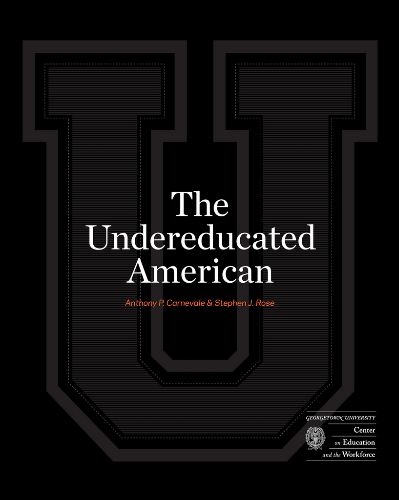
According to The Undereducated American, a report from the Georgetown University Center on Education and the Workforce:
- The United States has been under-producing college-educated workers for decades. From 1915 to 1980, supply grew in tandem with demand. But, starting in 1990, the share of college-educated young people in the workforce rose very slowly.
- The under-supply of post-secondary-educated workers has led to both inefficiency and inequity
- The nation must add 20 million post-secondary-educated workers by 2025 to increase productivity and reverse income inequality, or run the risk of becoming the global leader in income inequality.
Wednesday, July 06, 2011
Continued Concerns Regarding Psychotropic Drugging of Foster Care Youth
According to the Multi-State Study on Psychotropic Medication Oversight in Foster Care conducted by the Tufts Clinical and Translational Science Institute:
- The use of psychotropic medications for foster children between the ages of 2 and 21 has risen significantly over the past decade.
- Out of the forty-seven of the 50 U.S. states and the District of Columbia participated in this study, nine states had no written policy/guidelines regarding psychotropic medication use for foster youth.
47% of College Students are Independent Students
According to the CLASP fact sheet Yesterday's Nontraditional Student is Today's Traditional Student:
- 47% of undergraduates are independent students
- Nearly a quarter of students are parents, and more than one in eight students are single parents
- 63% of community college students would be unable to attend college if they did not work
- Between 2008 and 2018 demand for college-educated workers will rise by 16 percent while demand for other workers will stay flat.
- Demand for college-educated workers in nearly half of the states will grow 2 to 3 times faster than demand for high school graduates or dropouts. In six states (IN, MA, ME, MI, MN and OH), jobs that require a college education will grow 5-7 times faster.
- By 2018, nearly two-thirds of the nation’s jobs will require some postsecondary education or training.
- Over the next decade there will be no national growth in the number of high school graduates.
- Thirteen states (AK, HI, IL, MA, ME, MD, MS, MO, MT, NH, OH, PA, and WV) will have 5 to 10 percent fewer high school graduates in 2020.
Wednesday, June 29, 2011
Savings Account and College Retention
According to the Center for Social Development at Washington University in St. Louis, students with savings accounts in their name — regardless of the amount saved — are six times more likely to attend and remain in college compared to their peers without savings.
I recently created a series of scenarios for foster care youth (independent living activities) in which unexpected events catapoulted them into "crisis mode" -- and, in each scenario, if they had budgeted ahead of time in order to maintain a savings account, this would have saved them money and stress in the long run.
Tuesday, June 28, 2011
Barriers to Access for Children on Medicaid
According to the New England Journal of Medicine:
"Expansions of Medicaid and the Children’s Health Insurance Program (CHIP) are designed to extend access to high-quality medical care to all U.S. children. However, evidence suggests that the 37 million children covered by Medicaid–CHIP are less likely to receive specialty care than children covered by commercial insurance."
Access Disparities for Medicaid Children
Researchers have found that medical specialists are more likely to deny appointments to children with Medicaid. Assistants posed as mothers and made phone calls to 273 clinics in Cook County, IL. Only 11% of privately insured individuals were denied appointments, while 66% of the children on Medicaid were denied.
Disparities were also present in waiting times. At the 89 clinics that accepted both insurances, there was a 42 day wait for a child on Medicaid as opposed to a 20 day wait for those with private insurance.
Possible reasons for the differences include lower reimbursement rates for Medicaid and more problems with the payment process.
Researchers say that the results are not likely to be unique to Cook County. The study was published in the New England Journal of Medicine.
Thursday, June 16, 2011
Priced Out: How the Wrong Financial-Aid Policies Hurt Low-Income Students
According to Priced Out: How the Wrong Financial-Aid Policies Hurt Low-Income Students:
- Since the early 1980s, college tuition and fees have increased at four times the rate of inflation—even faster than skyrocketing healthcare expenses.
- The average low-income family must contribute an amount nearly three quarters of its annual household income each year just to send one child to a four-year college. That’s after all sources of grant aid are taken into account.
- After exhausting all sources of grant aid, the typical low-income student must come up with over $11,000 a year to attend a public or private nonprofit college.
- Meanwhile, middle-class and high-income families contribute amounts equivalent to just 27 percent and 14 percent of their yearly earnings, respectively.
The U.S. Department of Education's Integrated Postsecondary Education Data System (IPEDS) enables you to create your own group of colleges to compare their graduation rates and related information.
Friday, June 10, 2011
Thursday, May 05, 2011
Sunday, May 01, 2011
Our Role in Overcoming Mediocrity
Mediocrity says: "Let's just keeping doing the things we've done before, regardless of whether or not our efforts are effective."
It's up to us, as advocates, to suggest creative, innovative methods that can actually make things better.
I would argue that mediocrity is the primary cause of:
- Insufficient investigation of reported child abuse that allows further abuse, and even fatalities, to occur
- Abuse of children within foster care placements, including residential facilities
- Fatalities of children within foster care placements, including residential facilities
- Lack of preparation for adulthood for transitional youth
- Lack of supportive resources to support young people after they "emancipate" from the foster care system
They have, apparently, lost the fire that ignited their desire to make a difference in this particular area in the first place.
But we foster care alumni don't have that excuse: "This isn't an assigned task we are trying to accomplish, it's the life we have worked hard to live - and the journey that we each took in order to get there."
For foster care alumni, surviving during and after foster care is incredibly personal to us -- and we need to channel that energy and direct that passion towards making things better.
It will require personal discipline on our part: When we see a person in power that is just mired in apathy, we might (frankly) want to yell at them.
But - when it comes to "advocating without alienating," we who strive to strategically share know that yelling just closes other people's ears.
Imagine something that you, yourself, are just SICK of doing. That's how they feel about their work -- the difference is that we know that it's incredibly important.
How can we convey that message without accusing them or attacking them? (Accusing and attacking WON'T work - they'll just build up walls in their hearts and minds against us).
Perhaps, we can be gracious enough to stand back and let them respond to our story, and appreciate the fact that it has reinvigorated their work.
Maybe we can cheer them on in their newly renewed desire to make a difference, rather than condemning them for the past.
One young man in Ohio is so powerful in terms of his voice and his passion, and so diplomatic in terms of his dealings with other people that I have nicknamed him:
"The Foster Care Evangelist."
While sharing his personal talents and positive energy, this young man has reignited the passion of caseworkers who were previously described as being "apathetic" and "worn out" -- but whose passion for making a difference has recently been "born again."
His example taught me something new.
It kicked me out of my mediocrity when it comes to 'just doing the things we've done before.
His patience and perseverance reminded me of how we each CAN and WILL and MUST make a difference.
Wednesday, April 20, 2011
2011 Ohio Poverty Report
The Ohio Department of Development has released their 2011 Ohio Poverty Report which notes that approximately 1.7 million Ohioans, or about 15 percent of Ohio's population, are categorized as poor.
The report indicates that between 1999 to 2009, approximately 539,000 more Ohioans fell into poverty.
Another resource to be aware of is 2011 State of Poverty in Ohio series, published by the Ohio Association of Community Action Agencies and prepared by Community Research Partners.
Sunday, March 27, 2011
National Governor's Association Report on Foster Care, Transition to Adulthood
The National Governors Association Center for Best Practices released a 2010 report on The Transition to Adulthood: How States Can Support Older Youth in Foster Care, which provides states with strategies for supporting foster youth as they age out of the foster care system and transition to adulthood.
The Table of Outcomes for Foster Youth Compared With Youth in General, on page 4, is a particularly helpful tool for advocacy.
Health Care Needs of Youth "Aging Out" of Foster Care
Did you know that:
- Each year 26,000 youth emancipate from foster care on their 18th birthday and often lose critical Medicaid health coverage?
- Former foster youth experience Post-Traumatic Stress Disorder at six times the rate of their peers in the general population, and twice the rate of veterans returning from war?
- Only 57% of former foster youth have health coverage at ages 23 and 24 --- as compared to 78% percent of their same-age peers without a foster care history?
Beginning January 2014, Medicaid eligibility will be extended to cover children formerly in foster care who are under the age of 26.
Monday, March 21, 2011
Psychotropic Meds for Youth in Foster Care: Who Decides?
Dated January 5, 2011, and authored by the Georgia Supreme Court Committee on Justice for Children, this report makes vital recommendations:
Serving as a parent implies: Knowing what prescriptions have been prescribed, why they have been prescribed, what the side-effects are, what the long-term treatment plan is -- and not hesitating to advocate if the medication appears to be more harmful than helpful.
- Georgia needs to obtain accurate information about psychotropic medications and youth in foster care, including how many youth of what ages are receiving which medications for what purposes and at what costs.
- Georgia needs to develop guidelines for the use of psychotropic medications for youth in foster care.
- Georgia needs to develop a clear process for obtaining informed consent for the administration of psychotropic medications to youth in foster care. The process needs to be specific about who has authority to consent for a youth in foster care.
- Georgia should develop one or more independent clinical teams that include a board-certified child psychiatrist to provide the following services:
• individual case consultation to the state agency and prescribers;
• training for those who work with youth in foster care;
• independent review of all prescriptions for psychotropic medications that are written for youth in foster care before the prescription can be filled. - Youth in foster care should have a comprehensive mental health treatment plan that includes consideration of a variety of interventions and treatments that may include medications.
- Georgia needs to establish quality assurance mechanisms to continuously improve all systems serving the mental health needs of youth in foster care and to hold all parts of the systems accountable.
- The court system should help raise awareness about psychotropic drugs and youth in foster care.
"The state of Georgia has the awesome responsibility
of serving as parent for some 7500 children in foster care."
Serving as a parent implies: Knowing what prescriptions have been prescribed, why they have been prescribed, what the side-effects are, what the long-term treatment plan is -- and not hesitating to advocate if the medication appears to be more harmful than helpful.
Sunday, March 20, 2011
Did You Know About This Progress in Florida?
Normalcy for Foster Care Youth
"For many years youth in state care were not able to participate in the same types of activities as their peers. In order to fix that problem, the state is now required to include a “normalcy” component in the case plan.
According to Fla. Admin. Code 65C-30.007(10), youth should be encouraged and supported in taking part in extracurricular activities, obtaining work, attending social events, learning how to drive and doing all the other normal things that youth do.
Preparation for Adulthood
Florida law requires that transition planning begin for youth in state care at age 13 with the adoption of an education or career plan The state is required to conduct a “pre-independent living assessment” for all youth between the ages of 13 and 15.
It should then identify services needed to meet the needs identified in the assessment. The state must then conduct a staffing once a year to ensure that the youth receives the services and training necessary to develop independent living skills. Florida Statute §409.1451(4)(a).
Forging An Education and Career Path
Beginning at age 13, the youth’s case plan must include “an educational and career path” component based on the abilities and interests of each child. Florida Statute §409.1451(3) (b)1.
This path must be incorporated in the case plan and must be reviewed at each judicial hearing. The youth, assisted by foster parents and DCF or the CBC, must chose one of these post-secondary goals:
1. Obtaining a 4-year university degree.
2. Obtaining a 2-year college degree.
3. Obtaining a career/technical certificate.
4. Beginning employment or apprenticeship after completing high school or enlisting in the military.
"For many years youth in state care were not able to participate in the same types of activities as their peers. In order to fix that problem, the state is now required to include a “normalcy” component in the case plan.
According to Fla. Admin. Code 65C-30.007(10), youth should be encouraged and supported in taking part in extracurricular activities, obtaining work, attending social events, learning how to drive and doing all the other normal things that youth do.
Preparation for Adulthood
Florida law requires that transition planning begin for youth in state care at age 13 with the adoption of an education or career plan The state is required to conduct a “pre-independent living assessment” for all youth between the ages of 13 and 15.
It should then identify services needed to meet the needs identified in the assessment. The state must then conduct a staffing once a year to ensure that the youth receives the services and training necessary to develop independent living skills. Florida Statute §409.1451(4)(a).
Forging An Education and Career Path
Beginning at age 13, the youth’s case plan must include “an educational and career path” component based on the abilities and interests of each child. Florida Statute §409.1451(3) (b)1.
This path must be incorporated in the case plan and must be reviewed at each judicial hearing. The youth, assisted by foster parents and DCF or the CBC, must chose one of these post-secondary goals:
1. Obtaining a 4-year university degree.
2. Obtaining a 2-year college degree.
3. Obtaining a career/technical certificate.
4. Beginning employment or apprenticeship after completing high school or enlisting in the military.
Friday, March 18, 2011
Thursday, January 27, 2011
Plight of the Working Poor -- the Fastest Growing Class in America
Quote from The Working Poor: Invisible in America by David K. Shipler:
"Most of the people I write about in this book do not have the luxury of rage. They are caught in exhausting struggles. Their wages do not lift them far enough from poverty to improve their lives, and their lives, in turn, hold them back. The term by which they are described, 'working poor,' should be an oxymoron. Nobody who works hard should be poor in America."
Did you know that:
- The fastest growing class in America is the working poor?
- One out of every three families in the United States is considered to be "low income?"
- Over 1 in 10 children in the United States has at least one unemployed parent?
- Over 10 million low-income working families in the United States, an increase of nearly a quarter million from the previous year.
- 45 million people, including 22 million children, lived in low-income working families, an increase of 1.7 million people from 2008.
- 43 percent of working families with at least one minority parent were low income, nearly twice the proportion of white working families (22 percent).
- Income inequality continues to grow with the richest 20 percent of working families taking home 47 percent of all income and earning 10 times that of low-income working families.
- Over than half of the U.S. labor force (55 percent) has “suffered a spell of unemployment, a cut in pay, a reduction in hours or have become involuntary part-time workers” since the recession began in December 2007.
Federal Reauthorization of the Child Abuse Prevention and Treatment Act
On December 20, President Obama signed the reauthorization of the Child Abuse Prevention and Treatment Act (CAPTA), which funds services to protect children from abuse and neglect. CAPTA also includes the Adoption Opportunities Program, and this year the Act strengthens this program.
The Department of Health and Human Services is now required to spend 30 to 50 percent of Adoption Opportunities Program funding on key areas such as post-adoption support and recruitment efforts for older children, children of color, and children with special needs.
Counting the Invisible Men
Counting the Invisible Man: Black Males and the 2010 Census (2011), published by the Twenty-First Century Foundation and Frontline Solutions, is research brief that outlines:
- The efforts of four communities to increase the participation and counting of African American males in the 2010 Census
- Potential strategies to utilize in 2020
Tuesday, January 25, 2011
State of Homelessness in America
The National Alliance to End Homelessness recently released a report, The State of Homelessness in America, indicating that:
- Homelessness is on the rise
- Youth aging out of foster care are among the four populations most likely to go without shelter
- In the course of a year, the estimated odds of experiencing homelessness for a young adult who ages out of foster care are 1 in 6
Sunday, January 23, 2011
Youth Unemployment: An International Problem
Young people have borne much of the brunt of job losses during the recent global downturn.
Coping with unemployment is difficult for anyone. But for disadvantaged youth lacking basic education, failure to find a first job or keep it for long can have negative long-term consequences on their career prospects -- what some experts refer to as “scarring.”
From 2006 to 2010, the Organization for Economic Cooperation and Development (OECD) reviewed the youth labor markets in 16 countries: Australia, Belgium, Canada, Denmark, France, Greece, Japan, Korea, the Netherlands, New Zealand, Norway, Poland, the Slovak Republic, Spain, the United Kingdom and the United States.
The Summary and Main Recommendations for the United States is available at: http://www.oecd.org/dataoecd/34/30/44161929.pdf
Three key points, when it comes to the United States:
- At-risk youth are often left behind when it comes to school-to-work transitions
- These youth often remain disconnected from the workforce for many years
- Labor market programs that target the needs of disconnected youth are underfunded
Approximately five million young adults in the United States are “disconnected youth;" defined by WIA as low-income youth who face one or multiple challenges to employment or learning.
Quote from OECD report: "Not only are the vast majority of youth currently in this at-risk group not receiving the support they need to reconnect to education and the labour market, but their number is likely to increase significantly in the wake of the current economic crisis if urgent action is not taken."
OECD Recommendations include:
- Holding high schools accountable for the workforce and college readiness of their students
- Promoting the use of apprenticeships for teenagers (for example, in Michigan's School-to-Registered Apprenticeship Program)
- Encouraging small employers in rural areas to join together and train youth apprentices
Labels:
disconnected youth,
oecd,
unemployment,
united states
Subscribe to:
Posts (Atom)