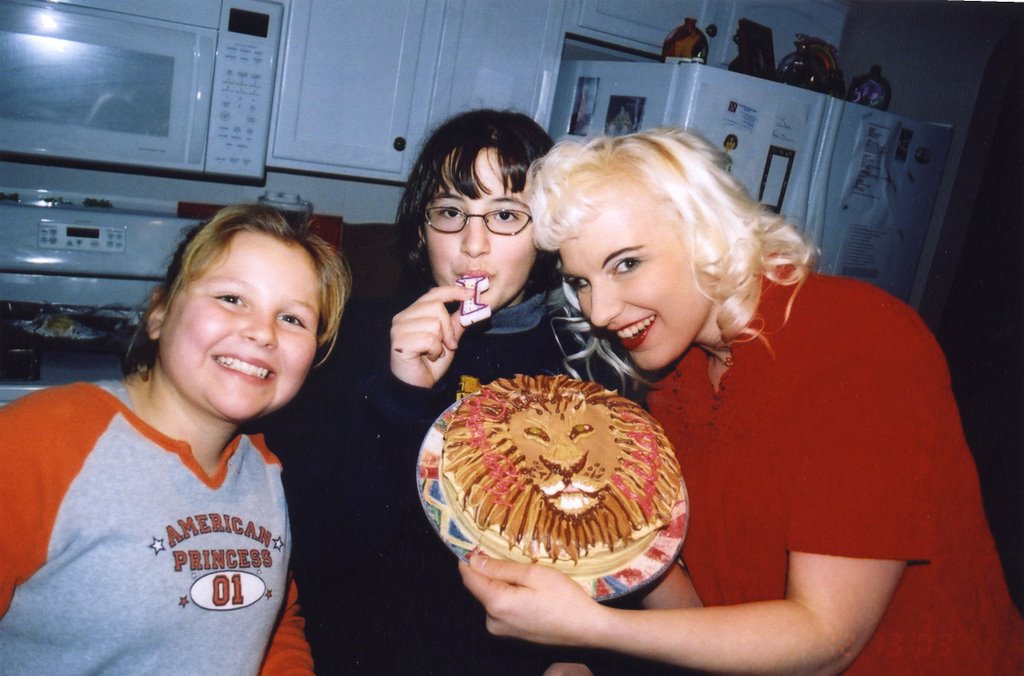
Children in foster care often have very serious issues around food. This might take the form of stealing or hoarding food, refusing to eat certain foods or exhibiting an eating disorder.
Behavior does not come out of a vacuum. Rather, it stems from personal experiences and thought patterns. People behave in ways that appear logical from their perspective, even if that behavior might seem strange or even harmful to other people.
Eating Disorders and Early InsecurityDr. Alfonso Troisi and his colleagues have recently published a study measuring the relationship between insecure attachment/early separation anxiety and a negative body image for women. The outcome was a strong association between the two.
Children who lack a safe and secure foundation in infancy are more vulnerable to eating disorders. They are more likely to have weight concerns and low self-esteem than children with secure attachments.
Insecure AttachmentAccording to attachment theory, if a child is secure in his or her relationship with a caregiver, that child will feel free to explore, because he or she is confident that a secure base exists, to return to in times of need.
The secure child explores freely while the mother is present, engages with strangers, is visibly upset to see mother depart, recovers and then is happy to see her return.
The insecure child lacks that self-assurance. When a primary caregiver disappears, he or she goes through a series of three stages of emotional reactions.
1.) Protest: The baby cries and refuses to be soothed by others.
2.) Despair: The baby is sad and passive.
3.) Detachment: The baby actively disregards and avoids the parent if the parent returns.
Attachment and Self WorthChildren who have been consistently loved by their caregivers develop a perception of themselves as "loveable," whereas children who are neglected and/or rejected by a caregiver often report feeling "unworthy of love."
Early connection with the caregiver makes it possible for a child to develop a model of themselves as loveable and valued. It reassures that child that there are loving, trustworthy people available and that the world is a safe place.
Interestingly, the most damaging style of attachment is neither anxious nor avoidant, but disorganized. Avoiding pain and worrying are both active strategies for dealing with the world. Children with disorganized attachment view human interactions as erratic and unpredictable. It's difficult to plan a response to perceived chaos.
Foster Children & Eating DisordersI plan to contact Dr. Troisi, and invite him to do a study on foster children and/or foster alumni. My rationale is the following:
-Who has more first-hand experience with separation anxiety than a foster child?
-Sexual and physical abuse are also associated with both eating disorders and foster care placement.
-Eating disorders are often an issue of control.
-Is it surprising that some foster children might use eating disorders as a way to cope with change, trauma and stress?
Sources-Ainsworth, M. D. S., et al (1978). Patterns of attachment: A psychological study of the Strange Situation. Hillsdale, NJ: Erlbaum.-
Bowlby, J. (1969). Attachment and Loss, Vol. 1: Attachment. London: Hogarth Press and the Institute of Psycho-Analysis.-Hernandez, Jeanne (1995). "The Concurrence of Eating Disorders with Histories of Child Abuse among Adolescents." Journal of Child Sexual Abuse, 4, 3: 73-85. -Holmes, J. (1993) John Bowlby and Attachment Theory. Routledge; -Holmes, J. (2001) The Search for the Secure Base: Attachment Theory and Psychotherapy; Brunner-Routledge; -Miller, Katherine J. (1996). "Prevalence and Process of Disclosure of Childhood Sexual Abuse among Eating-Disordered Women." In Sexual Abuse and Eating Disorders, ed. Mark F. Schwartz & Leigh Cohn, 36-51. New York, NY: Brunner/Mazel. -Troisi, A., et al (2006). Body dissatisfaction in women with eating disorders:
relationship to early separation anxiety and insecure attachment. Psychosomatic Medicine, 68(3): 449-5.